Bamiyan Panorama

Bamiyan Panorama
Showing posts with label Somalia. Show all posts

Friday, September 14, 2012

Somalia before the war


Postcard of Mogadishu - maybe taken in the 60's?


Fiat of Mogadishu, delivery of 4 wagons to Public Works shop January 20, 1970


View of the City - (Maybe Mogadishu?)


This video shows photos and film clips of Somalia in the 60's and 70's.  Looks like they had very good infastructure, businesses, restaurants, industry, etc....  


Girl scouts - with Somlian AND European girls together.
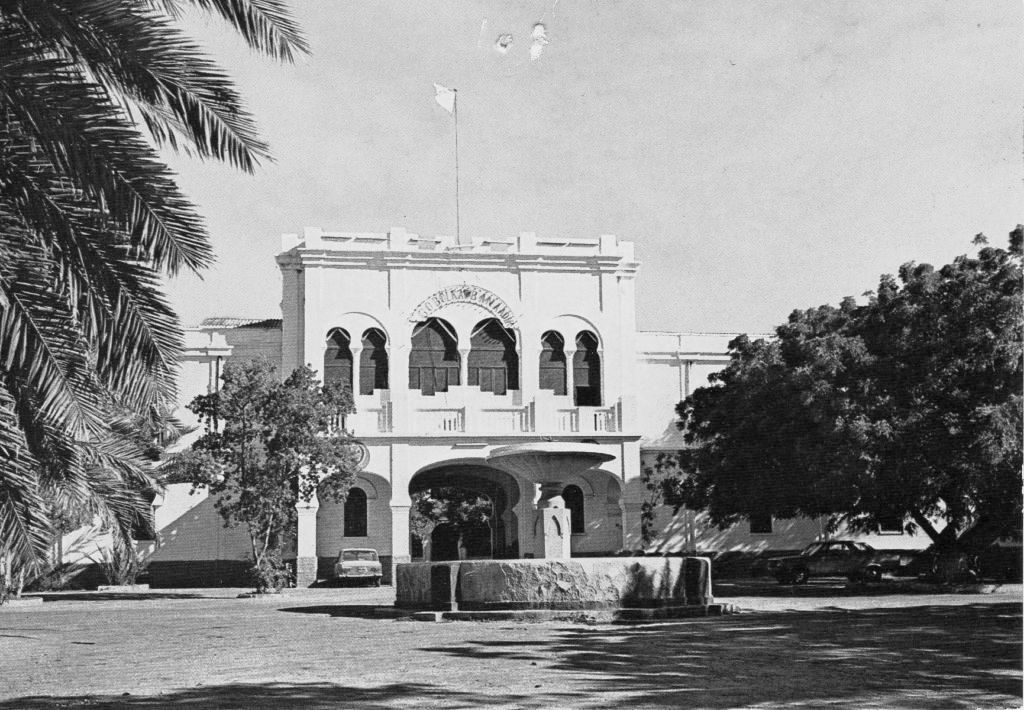


Mogadishu City Hall - before and after


Mogadishu Stadium, built in 1978


Mogadishu Waterfront


Mogadishu 1977


Somali National University (Mogadishu). It was created in 1954. There were three campuses (1. Gaheyr - Mogadishu at KM6, 2. Digfeer - Medicine school near Digfeer Hospital in Mogadishu, and 3. Lafoole Teaching College - Lafoole). Initially the language of instruction was Italian, but later also included Somali and English. Siad Barre’s government (no bias here) really did play an important role in expanding the national university and higher education through the country in the 1970’s. Research centers were established throughout different cities with the goal of developing the national economy.
The fifteen departments of Somali National University were:
1. Department of Sharia Law
2. Department of Linguistics (Somali, Arabic, English, German and Italian)
3. Department of Livestock and Forest Management
4. Department of Education (Teaching College at Lafoole), 20 km west of Mogadishu
5. Department of Agriculture
6. Department of Geology and Mining
7. Department of Medicine (College of Medicine) near Digfeer Hospital
8. Department of Chemical/Industrial Engineering
9. Department of History
10. Department of Geography
11. Department of Science
12. Department of Mathematics
13. Department of Public Health
14. Department of Engineering
15. Department of Political Science

Somali school children in Somalia. The kids uniforms are very Somali ( in terms of colors I mean). Their teacher looks hip too. I wonder what happened to this generation of children who enjoyed education, peace, and opportunities non existent today in Somalia.
Schoolchildren

Mogadishu 1963
Mogadishu 1963

Lighthouse port of Mogadishu 1988 #vintagesomalia
Old lighthouse for the Port of Mogadishu taken in 1988


Somali Nomads (in white) at a Market in 1969 in Xuddar(Hudar) Region, Somalia


Female employee - sometime in the 80's.

This is how Somali women use to dress back in the day. Effortless style. From their accessories to headscarf’s, shawls and not to mention gold. They had beautiful skin with no need for toxic makeup as well. You don’t see this anymore :(.
All people know of Somalis is current day Somalia, but there was a time when Somalis were really happy (well some) and life was good and people dressed well, had parties, went to the beach, worked hard. Somali women had a lot more freedom than any of the women in the Arab/Muslim world and beyond Africa as well. They could go to school, work, drive, wear whatever they wanted. They were not oppressed. They had culture. Somalia was very cosmopolitan once. Sad to see what it has become today.
This is how Somali women use to dress back in the day. Effortless style. From their accessories to headscarf’s, shawls and not to mention gold. They had beautiful skin with no need for toxic makeup as well. You don’t see this anymore :(.
All people know of Somalis is current day Somalia, but there was a time when Somalis were really happy (well some) and life was good and people dressed well, had parties, went to the beach, worked hard. Somali women had a lot more freedom than any of the women in the Arab/Muslim world and beyond Africa as well. They could go to school, work, drive, wear whatever they wanted. They were not oppressed. They had culture. Somalia was very cosmopolitan once. Sad to see what it has become today.   (quote from a Somali)

Xamar #vintagsomalia
Mogadishu


Air Somalia 


1970s Somali Women's Basketball Team

All photos and info are from http://vintagesomalia.tumblr.com/ 


Tuesday, June 12, 2012

Olympic hopefuls in Somalia train in former Islamist rebel camp

Image: Somali athletes run along a ruined street as they train during preparations for the 2012 London Olympic Games in Somalia's capital Mogadishu
Somali athletes run along a ruined street as they train during preparations for the 2012 London Olympic Games in Somalia's capital Mogadishu, March 14, 2012.
By
Training in a bullet-riddled stadium where the remains of a rocket propelled grenade lies discarded on the track's edge counts as progress for Somali Olympic hopeful Mohamed Hassan Mohamed.
A year ago, Mogadishu's Konis stadium was a base for Islamist militants and a work out meant at times running through the streets, dodging gun-fire and mortar shells in one of the world's most dangerous cities.
"It's easier for us to train now," said Mohamed.
It is a staggering understatement from the 22-year-old, one of four Somali athletes vying for the two slots guaranteed for Somalia at the London games.
For 20 years the capital's rutted roads were the frontline in running battles between feuding warlords and later Islamist insurgents fighting to overthrow a government propped up by foreign forces and cash.

The Konis stadium served as an al-Shabab rebel training camp until the al-Qaida-linked combatants fled the capital in August last year. Bullet holes pepper the stadium's concrete stands, which lie in mounds of rubble in places.
Progress, however, is relative. Somalia's Olympic bid is run on a shoestring. There are no dedicated personal trainers, physiotherapists or nutritionists.
"Our facilities are poor. We don't have a modern training camp or a modern gym. We should replace our running shoes frequently. Instead, we wash them," said Mohamed.

For now, the 1,500 meter specialist trains in relative safety, unless the security forces block off the surrounding area in advance of a government delegation on the move, forcing the athletes back onto the streets.
That means competing for space with patrolling armored troop carriers, donkey carts and mountainous piles of garbage. Roadside bombs have become a growing danger.

In April, a suicide bomber blew herself up at a ceremony in the city's national theater, killing the popular head of Somalia's Olympic committee and at least five others.
"The theater blast was a painful incident. It was a shocking day," Mohamed said.
Somalia has never won a medal at the Olympic games.
Its best performance was in 1996 when its most renowned athlete, Abdi Bile, took sixth place in the 1,500 meters in Atlanta.

At the time, militia fighters in the lawless capital dubbed their machine gun-mounted pickup trucks "Abdi Biles" in a typically Somali mark of respect for the runner's power and speed.
Somalia is not expected to announce the names of the two athletes who will compete in London until later this month. Unveiling their identities earlier might endanger their lives in a country plagued by kidnappings and targeted killings.

Rarely able to travel to international meets, no Somali athlete qualified for the London Games outright. Each national Olympic committee is eligible for two guaranteed places - one for a man, one for a woman - in athletics.
"Pump your arms. Pump your arms with power," urged the Somali team coach, Ahmed Ali Abukar, armed with nothing more than a stopwatch.
Don't slow up. Keep going until you drop," he yelled as sweat gleamed on Mohamed's sinewy body.
Abukar earns a salary of just $150 a month. That comes out of a $2,000 per month pot from the Somali Olympic Committee (SOC) that pays for the four athletes' accommodation in a renovated school classroom, their food and transport costs.

Kadija Dahir, president of the Somali Athletics Federation, said a request to the SOC for a further $3,500 a month to fund the training of two athletes failed.
"We need money to produce quality athletes," Dahir said. "With that money we wanted to do high altitude training in Ethiopia and buy better clothing and trainers."
Zamzam Mohamud Farah kneels toward Mecca and prays before taking to the hard-packed dirt track in a pair of heavy trainers, baggy tracksuit bottoms and an orange bandana.
One of two women competing for a wildcard entry, she puts her personal best at around 58 seconds in the 400 meters.
The women's world record stands at 47.60, a gaping difference that leaves her unlikely to contest a podium finish.
In a fractured country fighting to end 20 years of civil conflict, a medal, though, is hardly the point.
"I would not be going there to win, but for pride," Farah said. "I would be representing my flag, my soil and its people."

Friday, October 21, 2011

Aid in Somalia - that seems to be working!

Did you know that thousands of children in Somalia either look like this, or may look like this soon?  (keep reading, it gets better!)
This is a 4 year old child from southern Somalia named Ahmed Mohamed.  This picture was taken (i believe) on October 19th, 2011 in a hospital in Mogadishu.  Thank goodness he made it to a hospital!!

So..... depressing, right?  Hopeless?  It is so hard for aid to get to Somalia because of the lack of social systems and the ever present violence. 

I found a website for an aid organization that is actually making a difference!  It is called HIJRA (Humanitarian Initiative Just Relief Aid) and here is their website.  http://www.hijra.or.ke/
 The website is very informative but i'll give you suotes from their website showing what they focus on:

Water and Sanitation
Our WASH program components include; the construction of sanitation facilities, the promotion of proper hygiene practices and the delivery of immediate lifesaving support. The program further works to ensure community sustainability and development through the training of independent volunteer Water, Environment and Sanitation (WES) committees.

HIJRA's programs today have built over 6,000 pit latrines, constructed 150 garbage disposal sites, provided 3500 sanitation kits and provided safe water to 150 IDP camps.

HIJRA has successfully worked to construct and install 6 water platforms, 13 water tanks and over 100 distribution points.


Livelihoods
Food Security refers to the availability of food and one's access to it.  One may consider a household “food-secure” when its occupants do not live in hunger or fear of starvation.  Livelihoods covers a board range of activities and programs designed to enhance self-reliance through non-formal education, vocational and skills training programs, income generation activities, and food for work programs. 


Public Health
Public health is "the science and art of preventing disease, prolonging life and promoting health. There are 2 distinct characteristics of public health:
  1. It deals with preventive rather than curative aspects of health
  2. It deals with population-level, rather than individual-level health issues
At HIJRA our focus on Public Health is intervention and prevention rather than treatment through the promotion of healthy behaviors. Our goal is to strengthen the local community; thereby enabling the communities we assist to become self-reliant.

In order to achieve this goal HIJRA will not construct or build new hospitals rather we will work with the community and local leaders to rehabilitate and renew clinics that are already in place.


I strongly recommend that you look at their website!  Because it is an organization started by Africans, in Africa, I believe that they can really achieve great things eventually.  They have to start somewhere, right?


Thursday, July 28, 2011

Cynical view on Somalia? Or realistic? Even accurate?

Famine we could avoid
To pin the Somalia crisis on drought is wrong. This is an entirely predictable, man-made disaster

John Vidal  guardian.co.uk, 

Somali woman holds child
An internally displaced Somali woman fleeing from the drought gripping the Horn of Africa holds her child inside their makeshift shelter in Mogadishu. Photograph: Ismail Taxta/Reuters
A massive drought, as if out of nowhere, has settled over the Horn of Africa and the people fleeing to the camps are said to be "climate", "drought" or "environmental" refugees. The land, we are told by the international agencies rushing relief to the region, can no longer support its people.
Fifty or so years ago, the region had regular 10-year climatic cycles which were mostly followed by a major drought, and now the droughts are coming more frequently and are lasting longer. In the 1970s, say the pastoralists – the nomadic herders who move their cattle ceaselessly across the region in search of pasture – they started having droughts every seven years; in the 1980s they came about every five years and in the 1990s every two or three. Since 2000 there have been three major droughts and several dry spells, this one being not the worst, just the latest. "There is no doubt that it is hotter and drier now," said Leina Mpoke, a Maasai vet I met working on the Kenya-Ethiopia border that is now on the frontline of disaster.
There is also no doubt that climate change will make these areas of Africa harder to live in in future. But to pin this crisis on drought or climate change is wrong. This is an entirely predictable, traditional, man-made disaster, with little new about it except the numbers of people on the move and perhaps the numbers of children dying near the cameras. The 10 million people who the governments warn are at risk of famine this year are the same 10 million who have clung on in the region through the last four droughts and were mostly being kept alive by feeding programmes.
The fleeing Somalis seen on TV are the same people the UN warned about in 2008 when it said that one in six were at risk of starvation. Josette Sheeran, head of the UN's world food programme, appealed for $300m emergency aid this week – just as she did in 2008 when she told of "a silent tsunami [of hunger] gathering". And the same governments who were slow to respond to the emergency then are the ones who have been unwilling to help now.
Nor was the crisis unexpected. The rains failed early this year in Kenya and Ethiopia, and there has been next to none for two years now in Somalia. Aid agencies and governments have known for almost a year that food would run out by now. But it is only now, when the children begin to die and the cattle have been sold or died that the global humanitarian machine has moved in, with its TV shows, co-ordinated appeals and celebrities. Why did it not go earlier? Because it takes months to prepare properly for a disaster.
Just as in 2008, the war in Somalia is primarily responsible for the worst that is happening. As Simon Levine of the Overseas Development Institute says: "Wars don't kill many people directly but can kill millions through the way they render them totally vulnerable to the kinds of problems they should be able to cope with." In this case, he says, people have lost all their assets and can't access grazing grounds they need. But remember too, that Somalia has been made a war zone by the US-led "war on terror". It's our fault as much as anyone's.  (fact or opinion?)
But another, more insidious war has also been taking place across the region. This one is being waged by governments and businesses against the pastoralists. Over the years, they have been steadily marginalised and discriminated against by Ugandan, Kenyan and Ethiopian governments, and now they are further jeopardised by large-scale farming, the expansion of national parks, and game reserves and conservation.
For the politicians in Kampala, Nairobi or Addis, the lifestyle of these people seems archaic and outmoded. They are said to be outside mainstream national development, and to be pursuing a way of life that is in crisis and decline. So the politicians think little of taking away their dry season grazing grounds or blocking their traditional routes to pasture land. However, as seen in major international studies, the pastoralists produce more and better quality meat and generate more cash per hectare than "modern" Australian and US ranches.
Instead of starving the region's people of funds and then picking up the pieces in the bad years – as governments must do now – Britain, the EU, the US and Japan must help people adapt to the hotter, drier conditions they face. With better pumps and boreholes, better vaccination of cattle, help with education, food storage and transport, people can live well again.
This emergency will cost the west around $400m. If this money was put into long-term development instead of emergency aid and feeding programmes that keep people just above starvation, this tragedy could have been avoided. Instead, the world is almost certain to be here again in one or two years' time. Next time, though, there will be no excuses.

Interesting take on this crisis.  How sad that people are at risk of death, malnutrition, and starvation for so many years while not much long term help is being done.  Are we complacent?  Do we not care?  Should we care?  I think we should. 

Friday, July 15, 2011

Help the Somalian drought refugees!

If you have any money to spare, please donate it to any NGO/Non Profits that are helping the Somalian civilians who are starving and are refugees.  Please do your own research to make sure where your money is going. 

*update - here is an aid organization that seems to be doing great things:  click on this link > HIJRA

These are pictures from the BBC of a refugee camp in Kenya.

Two-year-old, Aden Salaad, looks up toward his mother, unseen, as she bathes him in a tub at a Doctors Without Borders hospital, where Aden is receiving treatment for malnutrition, in Dagahaley Camp, outside Dadaab, Kenya

Nado Mahad Abdilli builds a makeshift shelter for her family in Iffou 2

Somali parents care for their young children who are being treated for malnutrition, at a Doctors Without Borders hospital in Dagahaley Camp, outside Dadaab, Kenya.