Bamiyan Panorama

Bamiyan Panorama
Showing posts with label Mogadishu. Show all posts

Friday, September 14, 2012

Somalia before the war


Postcard of Mogadishu - maybe taken in the 60's?


Fiat of Mogadishu, delivery of 4 wagons to Public Works shop January 20, 1970


View of the City - (Maybe Mogadishu?)


This video shows photos and film clips of Somalia in the 60's and 70's.  Looks like they had very good infastructure, businesses, restaurants, industry, etc....  


Girl scouts - with Somlian AND European girls together.
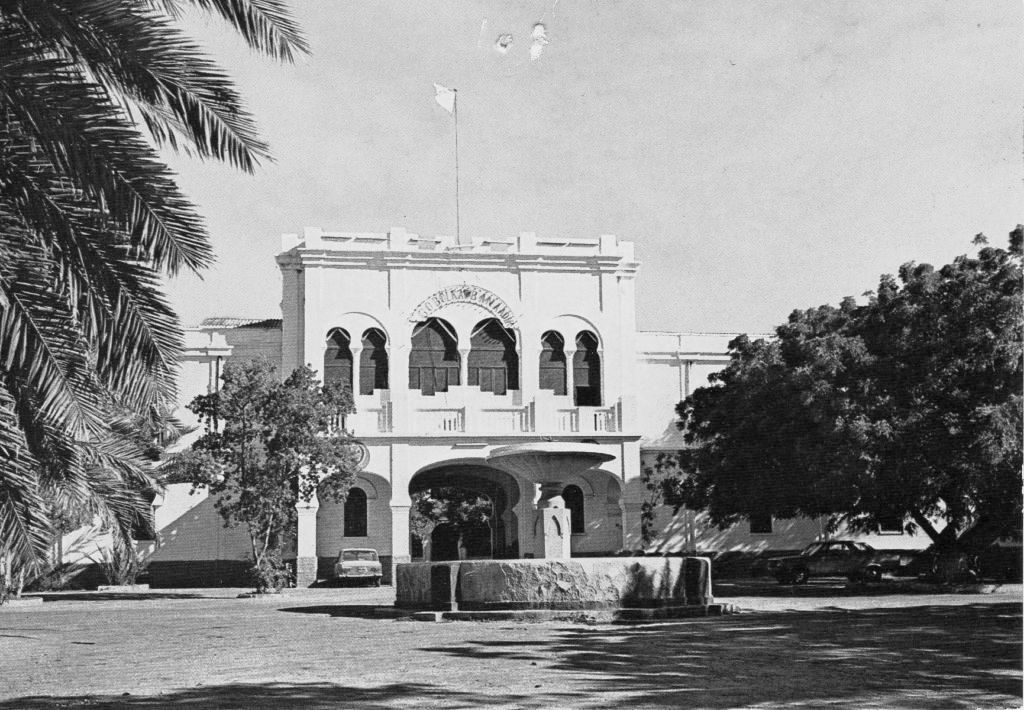


Mogadishu City Hall - before and after


Mogadishu Stadium, built in 1978


Mogadishu Waterfront


Mogadishu 1977


Somali National University (Mogadishu). It was created in 1954. There were three campuses (1. Gaheyr - Mogadishu at KM6, 2. Digfeer - Medicine school near Digfeer Hospital in Mogadishu, and 3. Lafoole Teaching College - Lafoole). Initially the language of instruction was Italian, but later also included Somali and English. Siad Barre’s government (no bias here) really did play an important role in expanding the national university and higher education through the country in the 1970’s. Research centers were established throughout different cities with the goal of developing the national economy.
The fifteen departments of Somali National University were:
1. Department of Sharia Law
2. Department of Linguistics (Somali, Arabic, English, German and Italian)
3. Department of Livestock and Forest Management
4. Department of Education (Teaching College at Lafoole), 20 km west of Mogadishu
5. Department of Agriculture
6. Department of Geology and Mining
7. Department of Medicine (College of Medicine) near Digfeer Hospital
8. Department of Chemical/Industrial Engineering
9. Department of History
10. Department of Geography
11. Department of Science
12. Department of Mathematics
13. Department of Public Health
14. Department of Engineering
15. Department of Political Science

Somali school children in Somalia. The kids uniforms are very Somali ( in terms of colors I mean). Their teacher looks hip too. I wonder what happened to this generation of children who enjoyed education, peace, and opportunities non existent today in Somalia.
Schoolchildren

Mogadishu 1963
Mogadishu 1963

Lighthouse port of Mogadishu 1988 #vintagesomalia
Old lighthouse for the Port of Mogadishu taken in 1988


Somali Nomads (in white) at a Market in 1969 in Xuddar(Hudar) Region, Somalia


Female employee - sometime in the 80's.

This is how Somali women use to dress back in the day. Effortless style. From their accessories to headscarf’s, shawls and not to mention gold. They had beautiful skin with no need for toxic makeup as well. You don’t see this anymore :(.
All people know of Somalis is current day Somalia, but there was a time when Somalis were really happy (well some) and life was good and people dressed well, had parties, went to the beach, worked hard. Somali women had a lot more freedom than any of the women in the Arab/Muslim world and beyond Africa as well. They could go to school, work, drive, wear whatever they wanted. They were not oppressed. They had culture. Somalia was very cosmopolitan once. Sad to see what it has become today.
This is how Somali women use to dress back in the day. Effortless style. From their accessories to headscarf’s, shawls and not to mention gold. They had beautiful skin with no need for toxic makeup as well. You don’t see this anymore :(.
All people know of Somalis is current day Somalia, but there was a time when Somalis were really happy (well some) and life was good and people dressed well, had parties, went to the beach, worked hard. Somali women had a lot more freedom than any of the women in the Arab/Muslim world and beyond Africa as well. They could go to school, work, drive, wear whatever they wanted. They were not oppressed. They had culture. Somalia was very cosmopolitan once. Sad to see what it has become today.   (quote from a Somali)

Xamar #vintagsomalia
Mogadishu


Air Somalia 


1970s Somali Women's Basketball Team

All photos and info are from http://vintagesomalia.tumblr.com/ 


Tuesday, June 12, 2012

Olympic hopefuls in Somalia train in former Islamist rebel camp

Image: Somali athletes run along a ruined street as they train during preparations for the 2012 London Olympic Games in Somalia's capital Mogadishu
Somali athletes run along a ruined street as they train during preparations for the 2012 London Olympic Games in Somalia's capital Mogadishu, March 14, 2012.
By
Training in a bullet-riddled stadium where the remains of a rocket propelled grenade lies discarded on the track's edge counts as progress for Somali Olympic hopeful Mohamed Hassan Mohamed.
A year ago, Mogadishu's Konis stadium was a base for Islamist militants and a work out meant at times running through the streets, dodging gun-fire and mortar shells in one of the world's most dangerous cities.
"It's easier for us to train now," said Mohamed.
It is a staggering understatement from the 22-year-old, one of four Somali athletes vying for the two slots guaranteed for Somalia at the London games.
For 20 years the capital's rutted roads were the frontline in running battles between feuding warlords and later Islamist insurgents fighting to overthrow a government propped up by foreign forces and cash.

The Konis stadium served as an al-Shabab rebel training camp until the al-Qaida-linked combatants fled the capital in August last year. Bullet holes pepper the stadium's concrete stands, which lie in mounds of rubble in places.
Progress, however, is relative. Somalia's Olympic bid is run on a shoestring. There are no dedicated personal trainers, physiotherapists or nutritionists.
"Our facilities are poor. We don't have a modern training camp or a modern gym. We should replace our running shoes frequently. Instead, we wash them," said Mohamed.

For now, the 1,500 meter specialist trains in relative safety, unless the security forces block off the surrounding area in advance of a government delegation on the move, forcing the athletes back onto the streets.
That means competing for space with patrolling armored troop carriers, donkey carts and mountainous piles of garbage. Roadside bombs have become a growing danger.

In April, a suicide bomber blew herself up at a ceremony in the city's national theater, killing the popular head of Somalia's Olympic committee and at least five others.
"The theater blast was a painful incident. It was a shocking day," Mohamed said.
Somalia has never won a medal at the Olympic games.
Its best performance was in 1996 when its most renowned athlete, Abdi Bile, took sixth place in the 1,500 meters in Atlanta.

At the time, militia fighters in the lawless capital dubbed their machine gun-mounted pickup trucks "Abdi Biles" in a typically Somali mark of respect for the runner's power and speed.
Somalia is not expected to announce the names of the two athletes who will compete in London until later this month. Unveiling their identities earlier might endanger their lives in a country plagued by kidnappings and targeted killings.

Rarely able to travel to international meets, no Somali athlete qualified for the London Games outright. Each national Olympic committee is eligible for two guaranteed places - one for a man, one for a woman - in athletics.
"Pump your arms. Pump your arms with power," urged the Somali team coach, Ahmed Ali Abukar, armed with nothing more than a stopwatch.
Don't slow up. Keep going until you drop," he yelled as sweat gleamed on Mohamed's sinewy body.
Abukar earns a salary of just $150 a month. That comes out of a $2,000 per month pot from the Somali Olympic Committee (SOC) that pays for the four athletes' accommodation in a renovated school classroom, their food and transport costs.

Kadija Dahir, president of the Somali Athletics Federation, said a request to the SOC for a further $3,500 a month to fund the training of two athletes failed.
"We need money to produce quality athletes," Dahir said. "With that money we wanted to do high altitude training in Ethiopia and buy better clothing and trainers."
Zamzam Mohamud Farah kneels toward Mecca and prays before taking to the hard-packed dirt track in a pair of heavy trainers, baggy tracksuit bottoms and an orange bandana.
One of two women competing for a wildcard entry, she puts her personal best at around 58 seconds in the 400 meters.
The women's world record stands at 47.60, a gaping difference that leaves her unlikely to contest a podium finish.
In a fractured country fighting to end 20 years of civil conflict, a medal, though, is hardly the point.
"I would not be going there to win, but for pride," Farah said. "I would be representing my flag, my soil and its people."