
The city where cyclists are unwelcome
“I will hit you with this car,” Mpaphi Ndubo remembers a driver of an open white truck screaming at him. Ndubo was cycling safely on the opposite side of the tarmac, but it was the kind of abuse he was used to. “You should not be on the road,” the driver’s passengers in the back had added to the onslaught.
It is just one example of the many threats that cyclists have to deal with on the streets of Gaborone, Botswana’s capital city. Just because motor vehicle drivers pay road tax, they think they own the road, says Ndubo, a bicycle entrepreneur who has resolutely been cycling the streets of Gaborone for 22 years.
“Honestly, they have made streets seem more dangerous than lions,” he says.
The hostile attitude of local drivers towards cyclists emanates from a deep-seated belief that cycling is for the poor. In modern Botswana, drivers have enjoyed the respect that comes with owning a car as opposed to a bicycle, which is now considered archaic.
But this preference for motor vehicles has brought problems with it. The number of cars registered in Botswana has doubled over the past decade. Two-thirds of these were listed in Gaborone, and the majority were second-hand imports. Many imported vehicles to the region do not meet emissions standards in their countries of origin and are not properly maintained or checked for their emissions.
“The state of air pollution in Gaborone is worrisome. The city is growing, and urban migration means more cars,” says Wiston Modise, a physicist researching air pollution at the University of Botswana. “High traffic congestion can result in high levels of pollutants such as carbon monoxide, nitrogen oxides, lead and hydrocarbons that pose major threats to human health, especially in the morning and afternoons during peak hours. City dwellers could suffer from respiratory diseases.”
The result is that the burgeoning number of low-efficiency cars contribute considerably to air pollution in Gaborone, which is regularly ranked among the worst for air quality in the world.
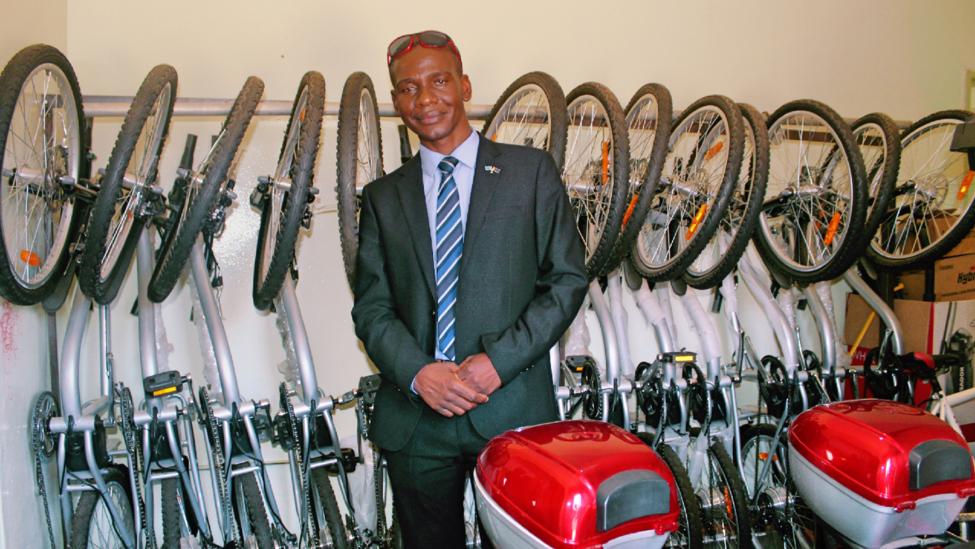
Mpaphi Ndubo has dealt with hostility against cyclists in Gaborone for 22 years (Credit: Sharon Tshipa)
For Mpaphi Ndubo, the answer was simple: encourage cycling in the city as an affordable, flexible and emissions-free method of transport. He wants Botswana to fall back in love with cycling.
Ndubo grew up a village called Masukwane in the north of Botswana, at a time when cycling was still held in high esteem. “When I was young my father bought a bicycle which my mother used to carry us children to the clinic,” he recalls. His mother would carry the youngest on her back, while either Ndubo or his older brother occupied the back carrier or crossbar.
At another village in northern Botswana called Sinete the role of the bike in the country’s past is celebrated in the form of a competition dubbed Dengenzela Bicycle Race. In this annual contest, elderly women race while simultaneously carrying a bucket of water on their heads, a mock baby on their backs and 25 litres of water on the back carriers of their bicycles. These cumbersome burdens – something that would never be seen at the hyper-efficient bike races of Europe – are intended to mimic the way bicycles were once commonly used in Botswana.
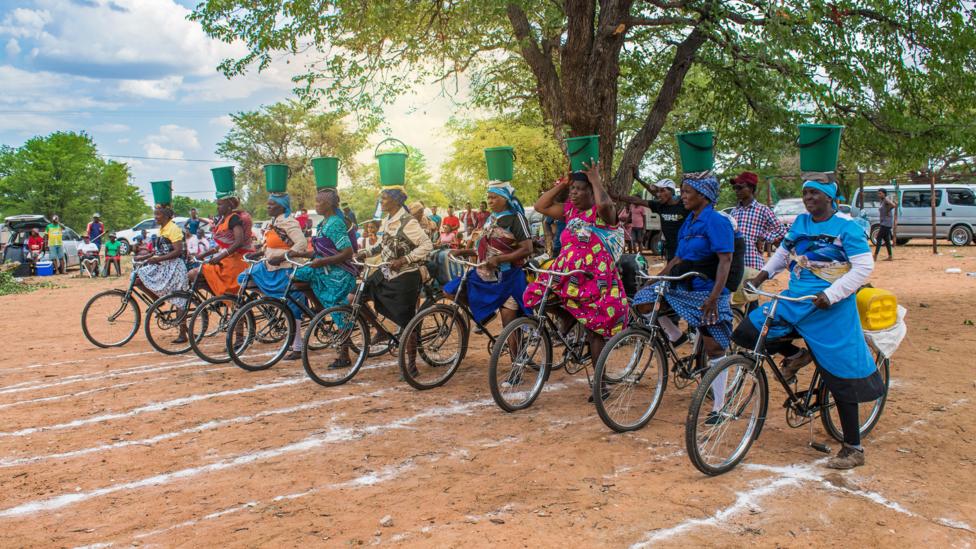
The Dengenzela Bicycle Race takes place every year in the village of Sinete, celebrating the role that cycling has played in local culture (Credit: Kenneth Middleton)
But this celebratory attitude towards bicycles in Sinete is not shared in the rest of Botswana. As soon as his business, AYS Cycling Solutions, had sprouted, Ndubo realised just how deep-rooted societal prestige around cars really was in Gaborone.
“My concept was welcomed by retailers. I was going to distribute to them, but they later turned their backs on me,” says Ndubo. Distributing bicycles for everyday transport wasn’t seen as a sound business plan, as bike shops tended to be viewed as niche outlets for those interested in cycling as a competitive sport, not for everyday travel. So, for his plan to go ahead, Ndubo had to become a retailer himself. “Generally people liked the products, but did not actually buy. I can’t help but think that my business came too early. Though cycling is leading in the first world, we are still decades behind development here.”
It was a discouraging start. Ndubo was stuck with a large fleet of bicycles that only a few people were buying. He did not give up, but instead started a non-governmental organisation called Cycling Embassy Botswana. Through it, he educates locals about the health and environmental benefits of cycling, and offers cycling tutorials to help people learn to ride. He is also became Gaborone city’s bicycle mayor, supported by BYCS, an Amsterdam-based social enterprise encouraging cycling in cities worldwide.
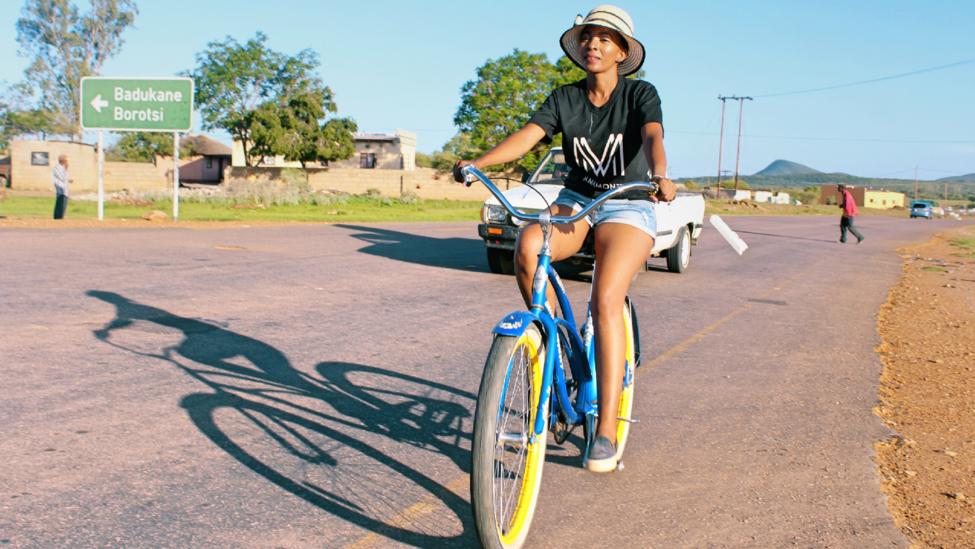
Young people, university students and government officials are among the people beginning to take up cycling day-to-day in Gaborone (Credit: Sharon Tshipa)
The European Union’s ambassador to Botswana Jan Sadek is working to encourage cycling in Gaborone too. “Dialogue on pollution and climate change inspired me to promote cycling in Botswana as a mode of transportation,” says Sadek, who is trying to cycle to and from work during his appointment in Botswana. For him, this is not a challenging commitment as he has been cycling since he was seven years old. When he came to Botswana in 2018, he brought his old bicycle that he has ridden in Sweden, the Czech Republic, Moscow, Russia, Belarus, Stockholm and Sudan. As Ambassador to Sweden in Sudan, he also cycled to and from work.
“Many people in Gaborone appreciate seeing me on the streets, but some want me off,” Sadek says. “Especially taxi drivers – they are annoyed by my presence on the road.” An upside for him are the groups of fascinated people who wave and greet him, as it is unusual to see leaders opt for an “undignified” means of transport. To date, Sadek says he personally knows of two other people he has inspired to take up regular cycling, and many others have expressed an interest.
Slowly, attitudes in Gaborone are changing. “Cycling is a perfect solution to air pollution in Gaborone,” says Opha Pauline Dube, a leading environmental change scientist at the University of Botswana and a resident of Gaborone. “We need to reduce our air pollution so there is no person who finds themselves exposed to levels that are higher than what is stipulated by the World Health Organization (WHO),” she says.
Botswana’s air pollution levels often rise higher than the WHO’s guidelines for particulate matter, ozone, nitrogen dioxide and sulphur dioxide. As well as emissions from vehicles, Botswana struggles with air pollution from industrial and indoor heating as many people continue to rely on traditional fuels for heating and cooking.
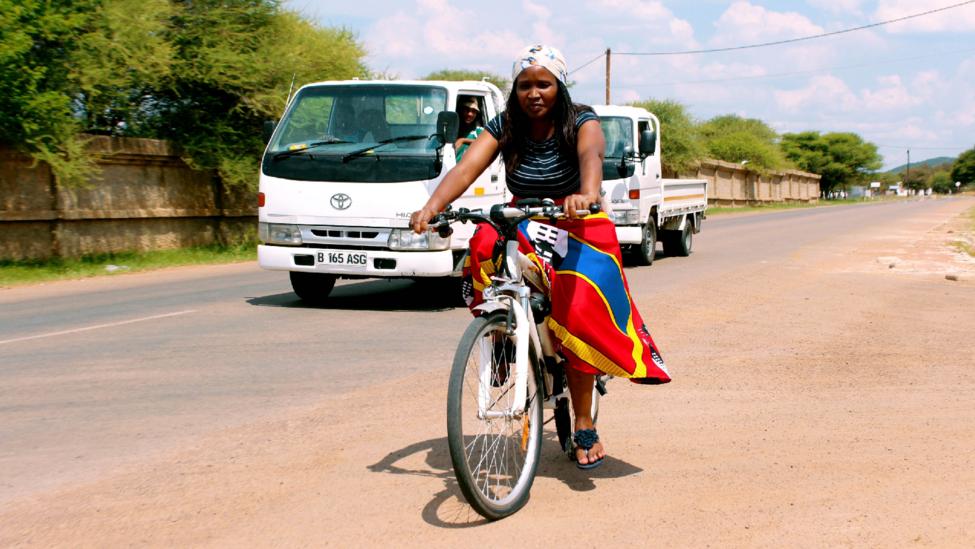
A cultural shift towards cycling in Gaborone has been slow, but entrepreneurs like Ndubo and Sadek hope it will continue (Credit: Sharon Tshipa)
But perhaps the biggest hurdle standing in the way of cycling returning as a popular mode of transport is the lack of proper infrastructure – good bicycle lanes, showers at workplaces, and clothing-changing facilities, among others. Without these people’s attitudes towards cycling will not change, says Dube. She recently received a bicycle as a gift, but has not yet learned to ride it. “Both my parents were cyclists, but they stopped cycling once they acquired cars,” she says. “So the bicycle disappeared in the home.” Regardless of the disadvantage, she intends to overcome her fear of falling and learn how to ride.
Ndubo’s Cycling Embassy Botswana lobbies for the provision of the infrastructure and policy changes that would make cycling safer in the city, seeking to contribute to the broader achievement of the UN’s Sustainable Development Goals. “When I started this business, I also wanted to address the problem of traffic congestion in our city,” says Ndubo. “But as time went by, I strove to contribute to the fight against climate change because bicycles are eco-friendly.”
Though still small, Ndubo now takes pleasure in his promising customer base of university students and government officials. His network of cycling lovers, though they are not full-time cycling lovers, he says is also expanding. Right now he has two electric bicycles that people rent out regularly at a shop in Molapo Crossing Mall in Gaborone.
With time, Ndubo aims to erode the social stigma around cycling in Gaborone. He hopes that one day the residents of the capital city might see the bicycle with the same appreciation and respect that the local people of Sinete view the elderly women racing through the village towards the finish line. And if Gaborone does become the next city to rediscover its love of the bicycle, it could enjoy much cleaner air as a result.

