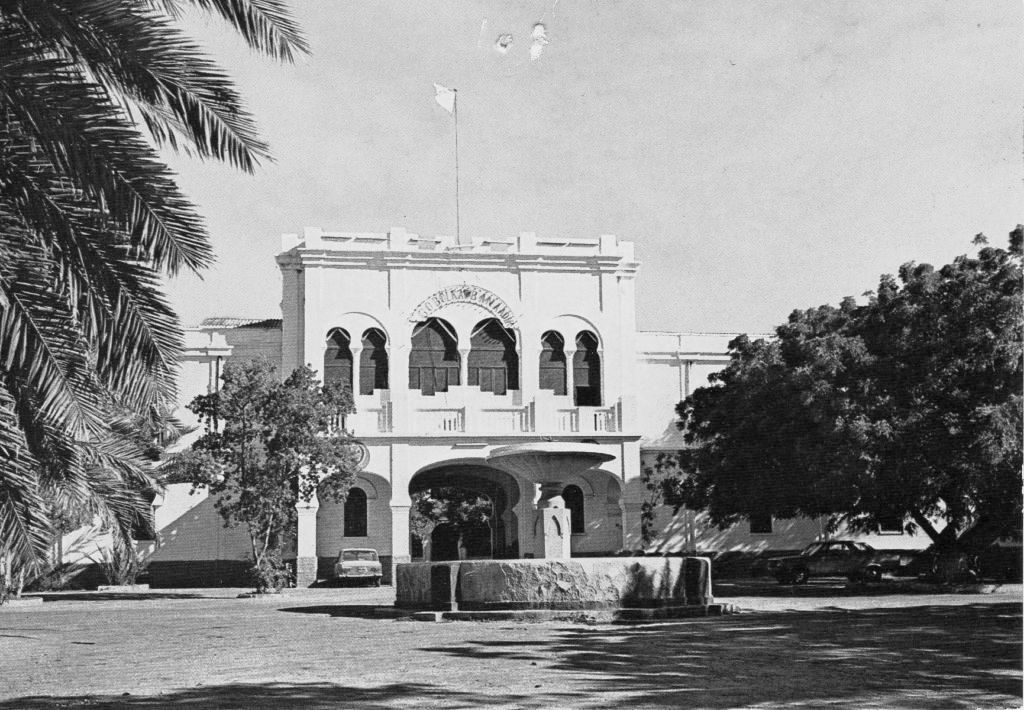
Bamiyan Panorama

Bamiyan Panorama
Showing posts with label infastructure. Show all posts

Monday, August 11, 2014

Photos of Kabul & Afghanistan in the 50's and 60's. (From a Russian perspective)

(All captions and descriptions translated from Russian)


Bruised internal conflicts and foreign intervention in Afghanistan for centuries took a step towards modernization in the mid-20th century. In the 1950s and 1960s have been great strides towards a more liberal and pro-Western lifestyle. Although Afghanistan was officially a neutral country during the Cold War, he also was influenced by both the United States and the Soviet Union, with Soviet equipment and weapons and financial assistance from the United States. At this time, the streets of Afghanistan prevailed relative peace and tranquility in Kabul were built modern building, the veil for a time became optional, the country embarked on a path towards a more open and prosperous society. Progress stopped in the 70s, when a series of bloody coups, invasions and civil wars shocked the country. All steps taken earlier in the direction of modernization, proved futile. The average life expectancy of Afghans who were born in 1960, was 31 year, so the vast majority of the people depicted in the photo, did not survive to the present day.


Афганистан 50-х и 60-х годов
Roadside vendors on a busy street in Kabul, Afghanistan, in November 1961.


Афганистан 50-х и 60-х годов
Two Afghan students from the Faculty of Medicine listening to their professor (right), 1962.

Афганистан 50-х и 60-х годов
Kabul 1968

Афганистан 50-х и 60-х годов
Kabul, November 1961

Афганистан 50-х и 60-х годов
People walking through a market in Kabul in May 1964.

Афганистан 50-х и 60-х годов
US President Eisenhower in Kabul, December 9, 1959, Eisenhower met with the 45-year-old King of Afghanistan Mohammad Zahir Shah to discuss the Soviet influence in the region and an increase in American aid to Afghanistan.

Афганистан 50-х и 60-х годов
Afghans lined up during the visit of President Dwight D. Eisenhower in the United States Kabul, December 9, 1959.

Афганистан 50-х и 60-х годов
 Dancers perform on the street during the visit of President Eisenhower in the United States Kabul, December 9, 1959 after a five-hour visit to Kabul by plane Eisenhower went to New Delhi.

Афганистан 50-х и 60-х годов
Selling fruit and nuts on the market in Kabul, November 1961.

Афганистан 50-х и 60-х годов
Children on the street in Kabul in November 1961.

Афганистан 50-х и 60-х годов
Modern traffic lights on the corner of a street in Kabul, May 25, 1964.

Афганистан 50-х и 60-х годов
 Afghans ride in a cart through arid rocky region of Afghanistan in November 1959.

Афганистан 50-х и 60-х годов
A worker checks a truck Russian production at the plant for the manufacture of chassis for the cars in the center of Kabul. The plant, like many other industries in the Afghan capital, was looted during the reign of the Afghan mujahedeen from 1992 to 1996.

Афганистан 50-х и 60-х годов
Log in Karkar coal mine, located approximately 12 kilometers from the provincial town of Puli Khumri in northern Baghlan province. Karkar coal deposits at the same time fully meet the needs of Kabul.

Афганистан 50-х и 60-х годов
Caravan of mules and camels moves along the winding paths Lataband Pass on the way to Kabul, October 8, 1949.

Мохаммад Захир-Шах и Джон Кеннеди
King of Afghanistan Mohammad Zahir Shah and President John F. Kennedy talk in the car on the way to the White House in Washington, DC, September 8, 1963.

Никита Хрущев
Soviet leader Nikita Khrushchev (in black hat) and Marshal Nikolai Bulganin make a review of the Afghan guard of honor during a visit to Kabul on 15 December 1955 left the Afghan Prime Minister Sardar Mohammed Daoud Khan, behind Foreign Minister Prince Naim.

Афганистан 50-х и 60-х годов
Street scene in Kabul in November 1966.

Афганистан 50-х и 60-х годов
City park in Kabul, May 28, 1968.

Афганистан 50-х и 60-х годов
Now destroyed Kabul-Herat highway that connects the Afghan capital with the Iranian border town of Mashhad.

Афганистан 50-х и 60-х годов
The modern building of the Ministry of Finance in Kabul, June 9, 1966 The building also houses a restaurant in western style. Fountain had a night light.

Афганистан 50-х и 60-х годов
Kabul, Afghanistan, in November 1961.

Афганистан 50-х и 60-х годов
Inside the modern government printing plant in Kabul, June 9, 1966.

Афганистан 50-х и 60-х годов
Amanullah Khan Palace in Kabul, October 8, 1949, the King of Afghanistan in the early 20th century, Amanullah Khan tried to modernize his country by means of reforms and the elimination of the age-old customs and traditions. He acted on the basis of what he saw during his visit to Europe.

Афганистан 50-х и 60-х годов
Bazaar in Kabul, December 31, 1969.

Афганистан 50-х и 60-х годов
Old and new buildings in Kabul, August 1969 In the background at the top of the hill stands the mausoleum of the late King Mohammed Nadir Shah.

Афганистан 50-х и 60-х годов
An Afghan man leads camels and donkeys through arid mountainous region in November 1959.

Афганистан 50-х и 60-х годов
King of Afghanistan Mohammad Zahir Shah rides his limousine on the main road Kabul Idga Wat, 1968, Zahir Shah, being the last king of Afghanistan, lived in exile in Rome after the coup in 1973. He returned to Afghanistan in 2002 after the removal of the Taliban from power in Kabul, and died in 2007 at the age of 92 years.

Афганистан 50-х и 60-х годов
Afghan boys play with a kite, in November 1959.

Афганистан 50-х и 60-х годов
Selling fruit and nuts on the open market in Kabul, November 1961.

Афганистан 50-х и 60-х годов
cobbled streets in Kabul, 1951.

Афганистан 50-х и 60-х годов
A new mosque in the outskirts of Kabul, in November 1961.

Афганистан 50-х и 60-х годов
Street scene in Kabul, March 26, 1954.

Friday, July 26, 2013

Despite Education Advances, a Host of Afghan School Woes

Despite Education Advances, a Host of Afghan School Woes

 
A girl reading in front of her class at Mir Ali Ahmad Girls School in Parwan Province. Female teachers are acutely scarce.


SALANG, Afghanistan — There is not an ounce of fat on the wiry frame of Abdul Wahid, and no wonder.  
After he finishes his morning work shift, he walks 10 miles down mountain trails in northern Afghanistan to the first road, where he catches a bus for the last couple of miles to the teacher training institute in Salang. He walks back up the mountain another 10 miles to get home, arriving well after dark, just in time to rest up for his day job.       
In his determination to formally qualify as a teacher, Mr. Wahid, 33, exemplifies many of the gains for Afghan education in recent years. “It’s worth it, because this is my future,” he said.
But he also personifies how far the efforts here have yet to go. Mr. Wahid’s day job is being the principal of the high school in his village, Unamak. Though he has only a high school diploma, he is the best educated teacher that his 800 students have.
It is widely accepted that demand among Afghans for better schooling — and the actual opportunity to attend, particularly for girls — is at its highest point in decades. For Western officials seeking to show a positive legacy from a dozen years of war and heavy investment in Afghanistan, improvements in education have provided welcome news.
But for those who are working to make it happen — local Afghan officials, aid workers, teachers and students — there are concerns that much of the promise of improvement is going unfulfilled, and major problems are going unsolved.
In interviews, they pointed out an abysmal dropout rate, widespread closings of schools in some areas of conflict and a very low level of education for those who do manage to find a seat in a class. Overcrowding is so bad that nearly all schools operate on split shifts, so students get a half-day, and many of them are on three shifts a day, meaning that those students get only three hours of instruction daily. And many children are not in school. Unicef estimated in 2012 that one in two school-age children did not attend at all.
Further, while there has demonstrably been positive and rapid growth in the public school system, there have also been daunting challenges, particularly a lack of capacity to find or train qualified teachers, print enough textbooks or build enough safe schools.
According to statistics compiled by Unicef, only 24 percent of Afghanistan’s teachers are qualified under Afghan law, meaning they completed a two-year training course after high school. In many rural places, there are sometimes teachers with 10th-grade educations teaching 11th and 12th graders.
Forty-five percent of the country’s 13,000 schools operate without usable buildings, under tents or canvas lean-tos, or even just under the branches of a tree; in a country of harsh extremes of climate both in winter and in summer, that means many missed school days.
The Afghan public school system has expanded immensely in recent years, buoyed by extensive international aid — the United States Agency for International Development alone has given $934 million to education programs over the past 12 years, according to the government agency. The education minister, Farouk Wardak, insists that 10.5 million students are enrolled this year, 40 percent of them girls, a huge increase from an estimate of 900,000 enrolled students, almost none of them girls, under Taliban rule in 2001.
Those numbers are widely quoted by Afghan and Western officials as a marker of success, but the claims are seen as unsupportable by many here.
Jennifer Rowell of CARE International, who has been conducting a study of education in Afghanistan, cautions that enrollment numbers are not actual attendance numbers.
And she said that when CARE tried to contact the headmasters of schools around the country, using contact lists kept by the Education Ministry, “half to three-quarters of phone numbers of school masters were missing, or the man we call has not been in the job for years.”
That makes it difficult for the Education Ministry to do any meaningful monitoring of actual school attendance around the country. Beyond initial enrollments, attendance tends to drop off quickly, often within just a few weeks. Only about 10 percent of students make it through to graduation, according to U.S.A.I.D. figures.     
Those numbers are even lower for girls, most of whom drop out between sixth and ninth grades, after puberty makes them marriageable in many areas. Female teachers are acutely scarce, and families worry about the safety of sending their daughters to school given continuing threats from the Taliban and resistance from some local elders.
The schools themselves have an incentive to inflate their figures, since their financing, which comes from Kabul, is based on enrollment.
In the eastern province of Khost, bordering Pakistan, Education Ministry documents from Kabul officially list 252,000 students enrolled last year. But in Khost Province’s education department, Kamar Khan Kamran, who works as a recruiter of teachers, said those numbers were wildly inflated. “I think we would hardly be able to enroll 20,000 to 25,000 students this year in the province, though the demand for education is booming rapidly.”
The shortage of teachers is so acute that in many districts the schools are hiring teachers who graduated only from sixth, seventh or eighth grade, Mr. Kamran said, “even though it’s not legal.”
For all of that, even those who warn that establishing quality education in the country is a mission far from accomplished will acknowledge that improvement has been marked over the past decade.
One United Nations official, speaking on the condition of anonymity so as not to anger Afghan officials, noted that while there still was not enough attention paid to the quality of education being provided, “enrollment has been tremendous, very encouraging, particularly for girls.”
S. Ken Yamashita, the head of U.S.A.I.D. in Afghanistan, said that even though reliable statistics are hard to come by in Afghanistan, “what’s absolutely clear is the number of kids in school has gone up, the participation of girls has gone up, and it’s such a huge differential.”
He added, “Education is very much a success in Afghanistan.”
A good example of that success is the Sardar Kabuli High School for Girls, in the capital. It was built for $27 million from the United States — and is still not the most expensive American-financed school. The Ghazi Boys High School in Kabul cost $57 million.
Last year Sardar Kabuli High graduated 290 girls, more than a third of the number of this year’s first-grade enrollments, and half of them passed university entrance exams.
“This school is an example to the whole country,” said the headmistress, Nasrin Sultani. Two years ago, it consisted of 38 tents and students attending in three shifts.
Now its 6,600 students, in two shifts, all have their own desks and no more than two students share one textbook.
In Zamina Stanikzai’s 12th-grade math class, when she asked for a show of hands of girls who want to go to college, all but one of the 40 students’ hands shot up. The one was a younger girl, waiting for her sister to finish classes to take her home.
When the girls were asked how many thought their families would allow them to go to college, however, half of the hands went down.
A girl in the back stood up and asked to speak, which she did in halting but good English. “Many of our families still believe in the old ways,” she said.
Mr. Wardak, the education minister, expressed pride when he talked about what has been accomplished despite the challenges, and particularly in remote areas, like Ghor Province. “For the first time in the 5,000-year history of Afghanistan, for instance, Ghor has 800 schools, 173 of them high schools,” he said in an interview.
He becomes defensive, however, about the quality issue. “I have $70 per student per year to spend,” he said. “In the U.S. you spend $20,000, in Pakistan $130. You don’t expect to do much for $70 a year.”
Outside Kabul’s public school system, the difference in quality can be drastic. At Mir Ali Ahmad Girls School in Char-i-Kor, in Parwan Province, the girls share their building with boys — two shifts for boys, one for girls. Only the boys have sports fields and playgrounds. One set of textbooks is shared by three or four girls. Two girls share a seat at each desk.
And even in the capital, most public schools are not the showpiece that Sardar Kabuli High is.
At Sayid Ismail Balkh School, 8,000 students are enrolled in three shifts, three hours each. They have buildings, but one set of them has no roofs or windows — it was a World Bank project, but the contractor took the money and ran — and another set was a Japanese-financed project that also was never finished, so only the first of two stories were built. Canvas tarps are slung over the walls to provide shelter.
“When it rains, we take the day off,” said Barat Ali Sadaqi, the headmaster.
Toilet facilities and running water systems have not been finished, and the odor of sewage permeates the small compound. Electricity is intermittent, and there are six computers for the whole student body.
On a given day, only 5,400 students attend out of the 8,000 enrolled. Still, they are crammed in: three to a desk, 40 to a class, 10 textbooks per class.
“This is development after 10 years in Kabul,” Mr. Sadaqi said.
 
At Sayid Ismail Balkh school in Kabul, 8,000 students are enrolled in three shifts of three hours each.
 
A teacher gave orders to pupils as they left class at Sayid Ismail Balkh school
 
Some buildings at Sayid Ismail Balkh school have no roofs or windows — the contractor took the money and ran.
 
A class for teachers in Parwan. According to statistics compiled by Unicef, only 24 percent of teachers are qualified.
 
Most Afghan girls drop out of school between sixth and ninth grades, after puberty makes them marriageable in many areas.
 
A school in Bamian. The public school system has expanded immensely in recent years.
 

Friday, September 14, 2012

Somalia before the war


Postcard of Mogadishu - maybe taken in the 60's?


Fiat of Mogadishu, delivery of 4 wagons to Public Works shop January 20, 1970


View of the City - (Maybe Mogadishu?)


This video shows photos and film clips of Somalia in the 60's and 70's.  Looks like they had very good infastructure, businesses, restaurants, industry, etc....  


Girl scouts - with Somlian AND European girls together.


Mogadishu City Hall - before and after


Mogadishu Stadium, built in 1978


Mogadishu Waterfront


Mogadishu 1977


Somali National University (Mogadishu). It was created in 1954. There were three campuses (1. Gaheyr - Mogadishu at KM6, 2. Digfeer - Medicine school near Digfeer Hospital in Mogadishu, and 3. Lafoole Teaching College - Lafoole). Initially the language of instruction was Italian, but later also included Somali and English. Siad Barre’s government (no bias here) really did play an important role in expanding the national university and higher education through the country in the 1970’s. Research centers were established throughout different cities with the goal of developing the national economy.
The fifteen departments of Somali National University were:
1. Department of Sharia Law
2. Department of Linguistics (Somali, Arabic, English, German and Italian)
3. Department of Livestock and Forest Management
4. Department of Education (Teaching College at Lafoole), 20 km west of Mogadishu
5. Department of Agriculture
6. Department of Geology and Mining
7. Department of Medicine (College of Medicine) near Digfeer Hospital
8. Department of Chemical/Industrial Engineering
9. Department of History
10. Department of Geography
11. Department of Science
12. Department of Mathematics
13. Department of Public Health
14. Department of Engineering
15. Department of Political Science

Somali school children in Somalia. The kids uniforms are very Somali ( in terms of colors I mean). Their teacher looks hip too. I wonder what happened to this generation of children who enjoyed education, peace, and opportunities non existent today in Somalia.
Schoolchildren

Mogadishu 1963
Mogadishu 1963

Lighthouse port of Mogadishu 1988 #vintagesomalia
Old lighthouse for the Port of Mogadishu taken in 1988


Somali Nomads (in white) at a Market in 1969 in Xuddar(Hudar) Region, Somalia


Female employee - sometime in the 80's.

This is how Somali women use to dress back in the day. Effortless style. From their accessories to headscarf’s, shawls and not to mention gold. They had beautiful skin with no need for toxic makeup as well. You don’t see this anymore :(.
All people know of Somalis is current day Somalia, but there was a time when Somalis were really happy (well some) and life was good and people dressed well, had parties, went to the beach, worked hard. Somali women had a lot more freedom than any of the women in the Arab/Muslim world and beyond Africa as well. They could go to school, work, drive, wear whatever they wanted. They were not oppressed. They had culture. Somalia was very cosmopolitan once. Sad to see what it has become today.
This is how Somali women use to dress back in the day. Effortless style. From their accessories to headscarf’s, shawls and not to mention gold. They had beautiful skin with no need for toxic makeup as well. You don’t see this anymore :(.
All people know of Somalis is current day Somalia, but there was a time when Somalis were really happy (well some) and life was good and people dressed well, had parties, went to the beach, worked hard. Somali women had a lot more freedom than any of the women in the Arab/Muslim world and beyond Africa as well. They could go to school, work, drive, wear whatever they wanted. They were not oppressed. They had culture. Somalia was very cosmopolitan once. Sad to see what it has become today.   (quote from a Somali)

Xamar #vintagsomalia
Mogadishu


Air Somalia 


1970s Somali Women's Basketball Team

All photos and info are from http://vintagesomalia.tumblr.com/