Bamiyan Panorama

Bamiyan Panorama
Showing posts with label Pakistan. Show all posts

Thursday, February 07, 2019

Pashtun Tahaffuz (Protection) Movement - A protest Pakistan wants to hide from the world

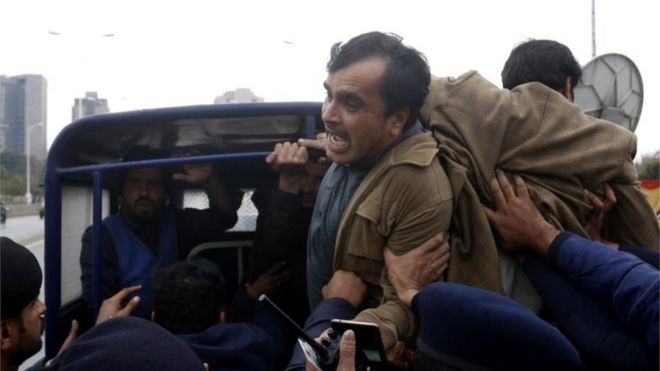
Security officials arrest supporters of Pashtun Tahaffuz Movement (PTM) during a protest in Islamabad, Pakistan, 05 February 2019.Image copyrightEPA
Image captionMore than 30 PTM supporters were arrested and their Islamabad rally did not take place
Why do some protests get reported in Pakistan and others not? M Ilyas Khan examines a story of human rights abuses the media is reluctant to cover and the authorities do not want to be told.
Pakistan's vibrant, at times almost cacophonic media, is struggling to report a fundamental contradiction in state policy.
This was at its most visible this week outside Islamabad's National Press Club.
An open ground outside the club premises - which some call Pakistan's Hyde Park because it is used for gatherings and protests - was occupied by a few hundred students from religious seminaries linked to a banned militant group.
They were holding an event to mark Kashmir Day, an official holiday in Pakistan which is observed to highlight human rights violations by Indian security forces in Indian-administered Kashmir.
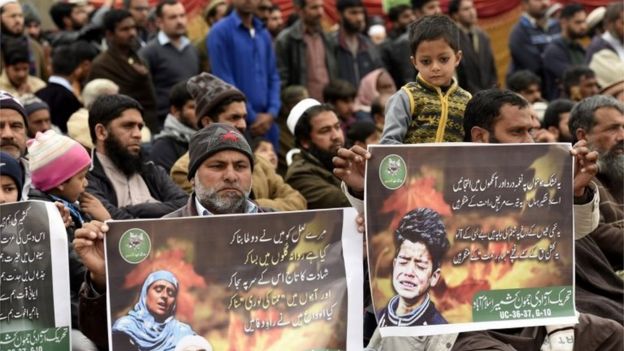
People listen to a speaker during a protest to show solidarity with Kashmiris living in Indian-administered part, on Kashmir Solidarity Day, in Islamabad, Pakistan, 05 February 2019.Image copyrightEPA
Image captionThe Kashmir rally was given lots of prominence and went ahead
But on the periphery of the Kashmir rally, police were busy spotting and arresting young men they suspected had come to attend another rally due to be held at the same venue.
Far from being militants, they were members or supporters of a rights movement that has been highlighting abuses by Pakistan's own military, in the ethnic Pashtun regions along the border with Afghanistan.
By the end of Tuesday, more than 30 activists of the Pashtun Tahaffuz (Protection) Movement, or PTM, had been rounded up, thrown in a police truck and taken to a police station.
The drama unfolded against the backdrop of speeches from the Kashmir rally in which speakers listed rights violations in Kashmir by the Indian army, and right in front of the eyes of the waiting media.
Dozens of television and newspaper photographers raced from one end to another trying to capture each arrest on camera.
But it was just their journalistic instincts kicking in - not a race to be first to actually cover the drama.
Because, while their TV channels thoroughly covered Kashmir Day events all over the country, including Islamabad, none of the videos of the arrests of the activists made it to the TV screens. Nor did they make headlines in the morning newspapers.
The six tribal districts of Pakistan - collectively called the Federally Administered Tribal Areas (Fata), and turned into a vast sanctuary for Taliban fighters fleeing the US invasion of Afghanistan after the 9/11 attacks - have been likened to an information black hole.
Many say the Talibanisation of these districts was allowed by the Pakistani establishment under a policy which sought to control Afghanistan with a view to prevent it from emerging as a strong regional ally of India, Pakistan's arch-rival.
Subsequent factionalisation of the Taliban drew the Pakistani military into tribal rivalries, triggering large-scale rights violations both by the military and the Taliban.
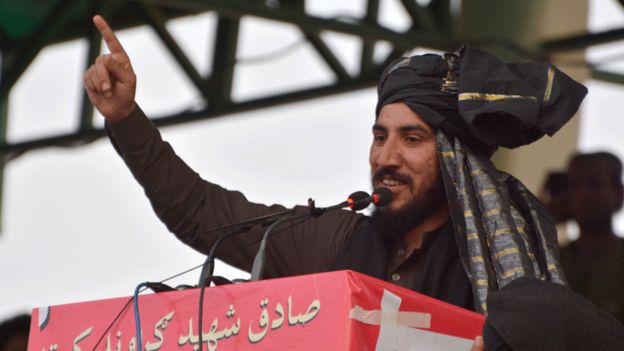
Quetta, Pakistan. 11th March, 2018. Chief of Pashtun Tahafuz Movement Mr Manzoor Pashteen addressing to Public gathering in Quetta, during campaign of Pashtun Long march in Pakistan.Image copyrightALAMY
Image captionManzoor Pashteen has accused the military of covering up years of rights abuses
The number of civilians killed in the conflict runs into thousands, and about three million people have been displaced, many of them many times.
For years, the local population caught in the conflict were too afraid to speak about transgressions, until the PTM burst onto the scene last February and started to circulate well-documented cases of abuses by the military and the Taliban, as well as the nature of the relationship between the two.
The material, the PTM's peaceful tactics and its insistence that the authorities treat people in the tribal areas in accordance with the law, as elsewhere in the country, caught the imagination of the media, and progressive elements across all ethnic groups hailed it as a good omen for the country's quest for democracy.
But then in the second half of 2018 the media came under increasing pressure, reportedly from the military, to stop covering the PTM. One by one, columnists offering analysis of the movement's message and its activities were dropped - not only by the marginal press but some of the most respected newspapers of the country.
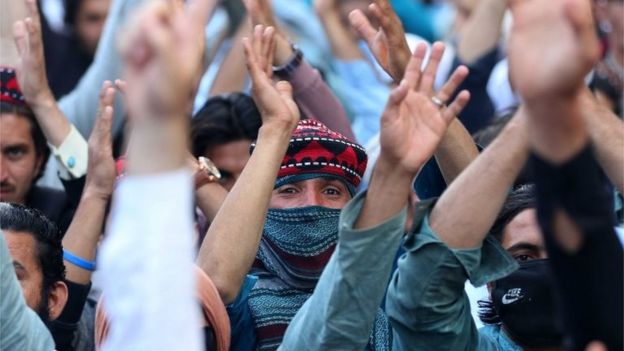
Supporters of Pashtun Tahaffuz Movement (PTM) shout slogans during a protest against the arrest of one of their leader Alamzeb Mehsud in Karachi, Pakistan, 23 January 2019.Image copyrightEPA
Image captionPTM supporters have been demonstrating but the story is not making headlines
And any mention of the PTM completely vanished from the television screens.
More recently, the authorities have gone a step further and have begun breaking up PTM gatherings, confident in their knowledge that it is not going to get play in the media.
Over the weekend, police in Balochistan province cracked down on one such PTM gathering in which a prominent activist, Ibrahim Arman Luni, was killed.
Tuesday's gatherings were called by PTM chief Manzoor Pashteen in protest at Mr Luni's killing.

Friday, August 04, 2017

The friendship that survived the division of a nation

The friendship that survived the division of a nation

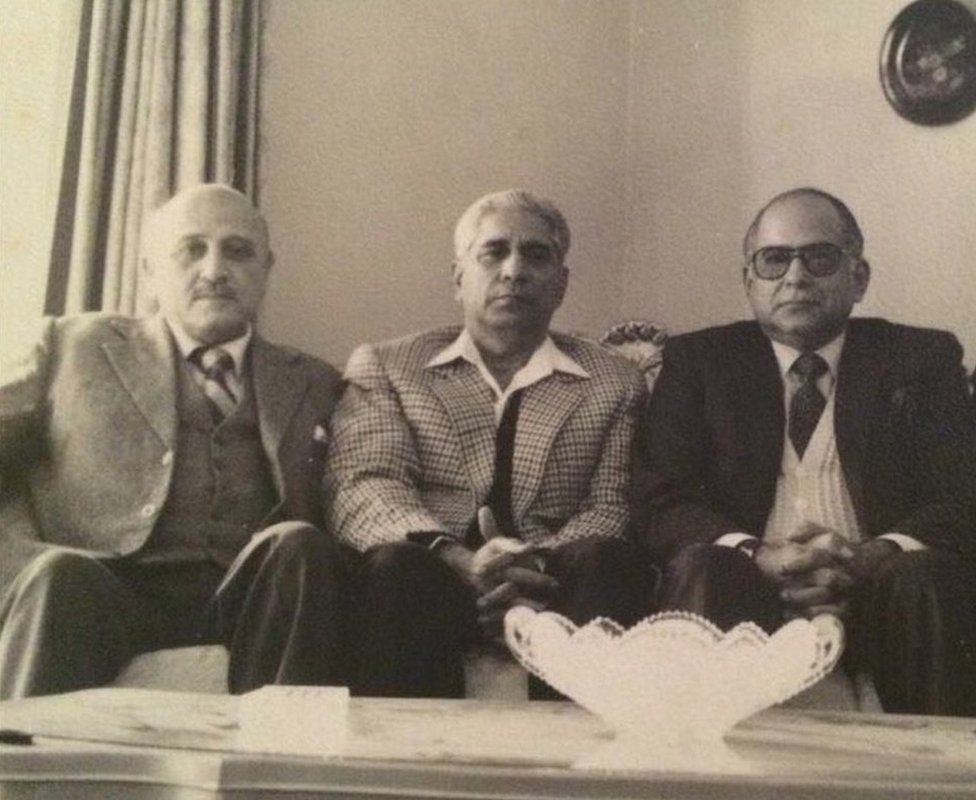
Agha, Amar and Rishad
Image captionAgha Ahmed Raza, Amar Kapur and Rishad Haider grew up in Lahore, Pakistan

Seventy years ago, in August 1947, British colonial rule in India came to an end. The country was divided into two independent states - Hindu-majority India and Muslim-majority Pakistan. Using letters and diaries sourced from the world's first Partition Museum which opens in Amritsar on 17 August, Soutik Biswas pieces together the extraordinary story of four friends who were separated by the traumatic event and reunited 30 years later.

"Our country has been broken; the great, sound pulsating heart of India has been broken," a young man in Lahore, Pakistan, wrote to his best friend in Delhi, the capital of India, in the summer of 1949.

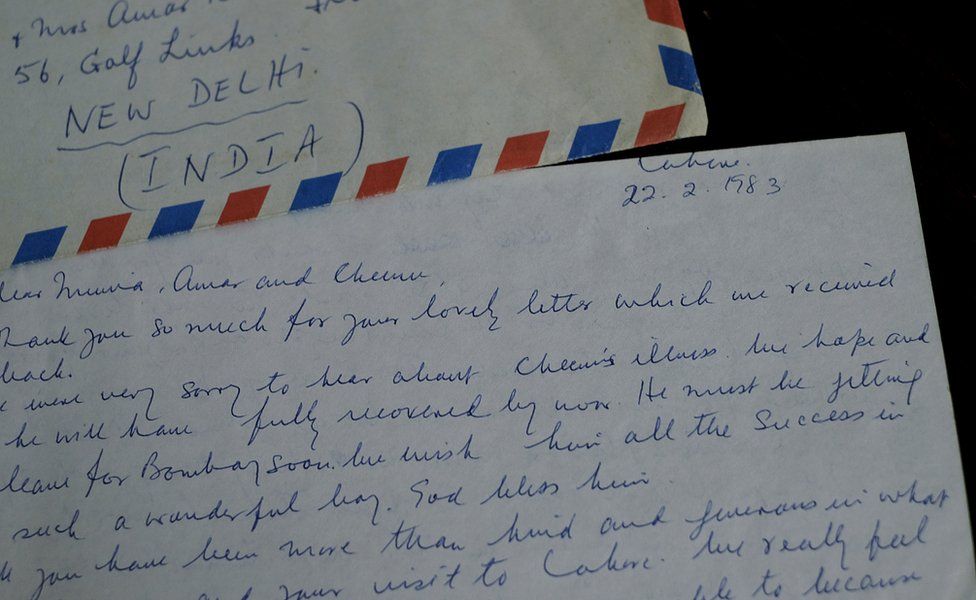
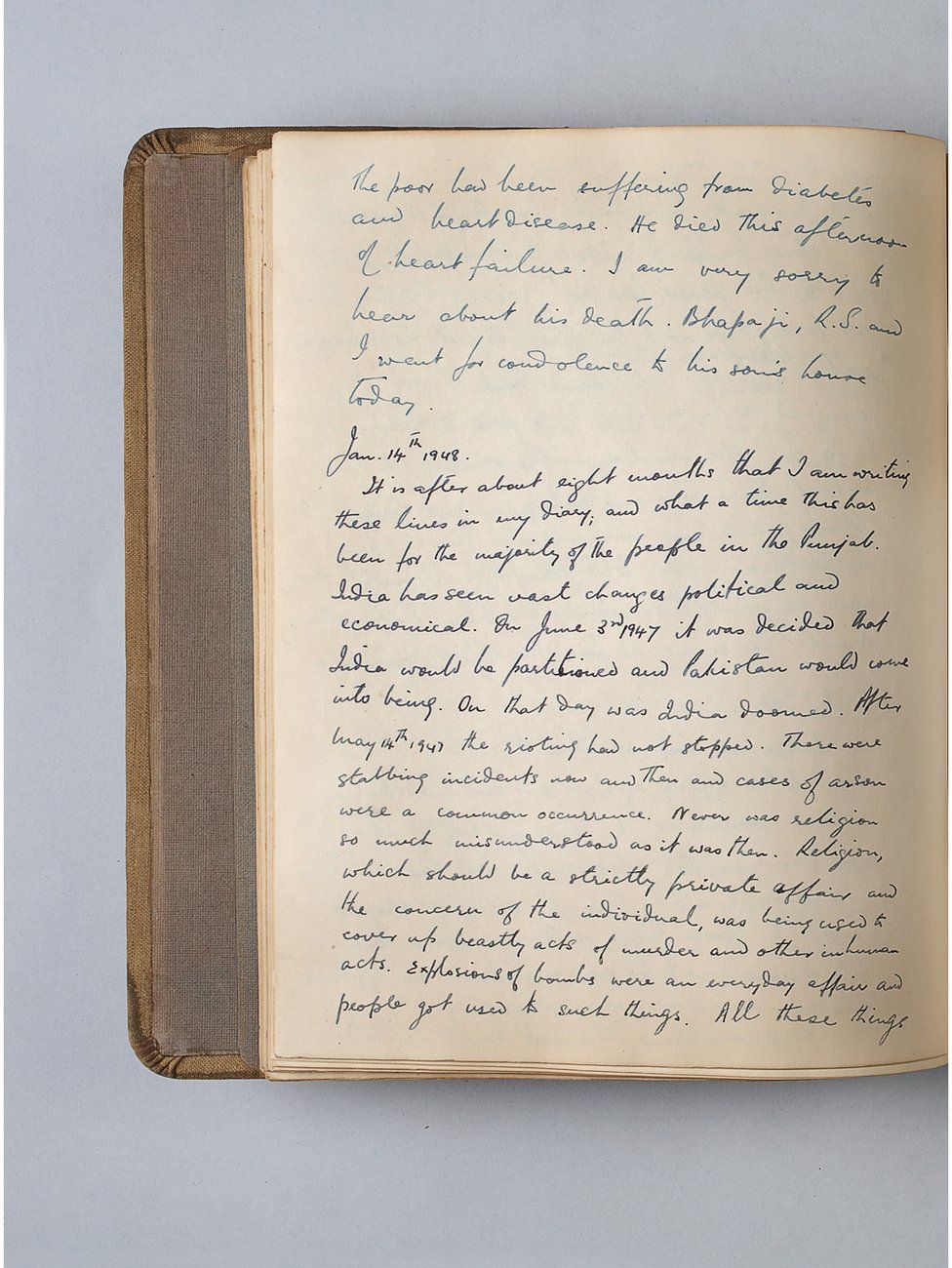
Writing in elegant cursive and turquoise blue ink, Asaf Khwaja had poured his heart out to Amar Kapur. Barely two years had passed since they had been separated by the bloody partition which split the subcontinent into the new independent nations of India and Pakistan.

"We in Lahore, your friends and former playmates, those who were in school with you and in college and whose first 25 years of life, are inseparably linked with those of yours assure you with the utmost sincerity that distance has not made the slightest difference in our love and affection for you; that we remember you, and remembered you often, with the same brotherly feeling that for so long characterised our relations," wrote Asaf, who had just joined the Pakistan Times newspaper as a journalist.

"We have spent good times, Amar, grand times, together."

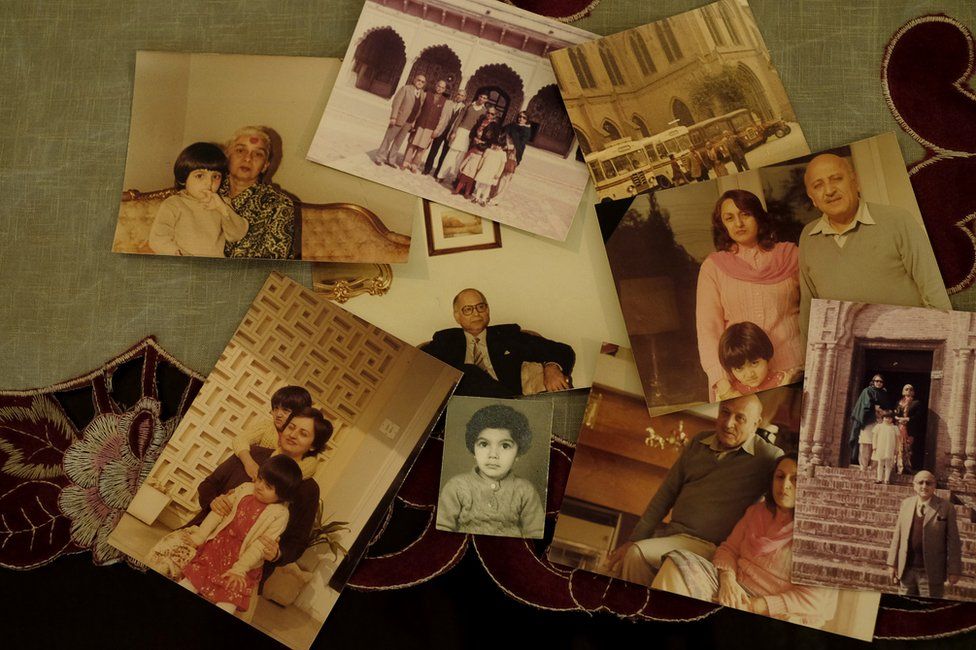
Amar Kapur, Asaf Khwaja, Agha Raza and Rishad Haider were like a brotherhood of friends.

They lived within a three-mile radius, visited each other's homes, shared street snacks on the way home from convent school, studied in the same college and played soft ball cricket with twigs for stumps. From innocent boyhood to callow youth, they had shared the good times.

Then, in the tumultuous summer of 1947, hard times arrived with a vengeance.

Amar's separation had hurt the most. He was the only Hindu in the group, and his friends called him Punditji, which means a Hindu priest.

Three weeks after the partition in August 1947, Amar and his family abandoned their sprawling family home and 57-year-old printing business in Lahore, and joined the millions of refugees that crossed the border in what was one of the greatest migrations in human history.

Two years later, in Delhi, they were still trying to salvage their lives from the detritus of partition.
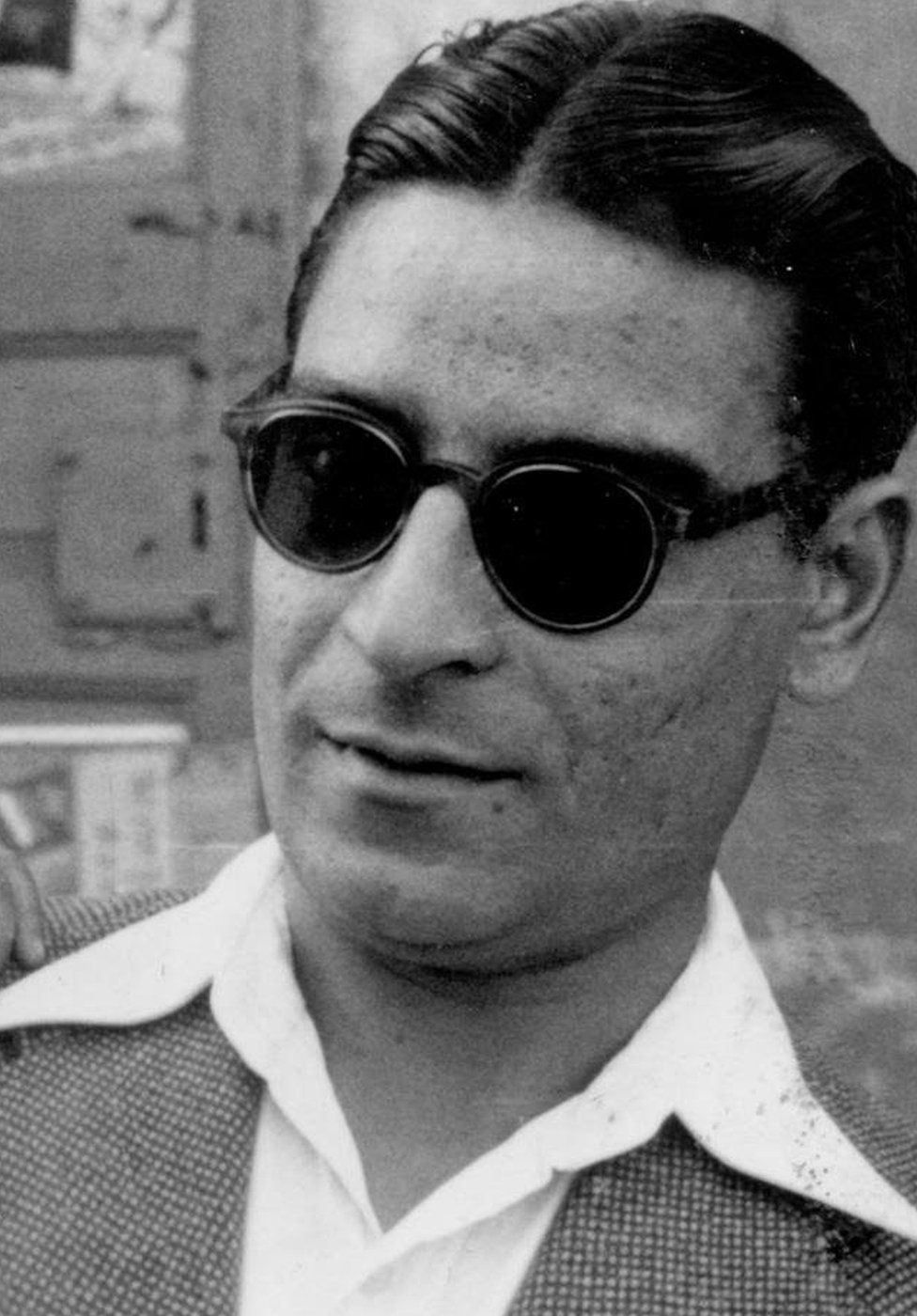
Asaf KhwajaImage copyrightCOURTESY OMAR KHWAJA
Image captionAsaf Khwaja worked as a journalist with Pakistan Times
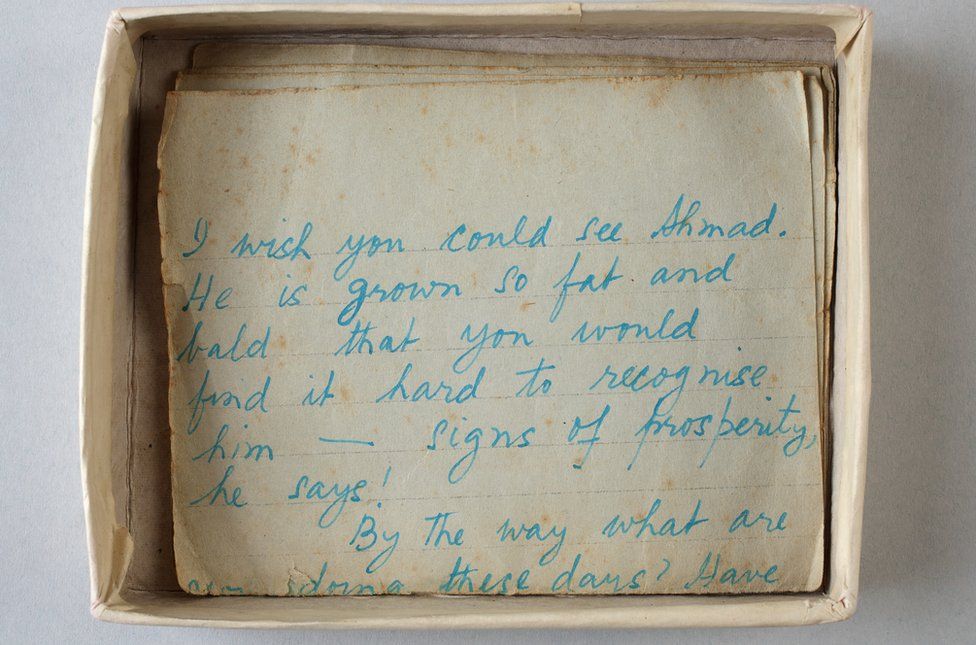
Letter HIGH RESImage copyrightPARTITION MUSEUM
Image caption..and kept in touch with Amar Kapur through letters


Back in their severed homeland, Asaf, Agha and Rishad had entered adulthood and were starting to earn a living.

Asaf's mordant wit was on magnificent display as he shared the news about their friends.

"Agha and Rishad have entered into business - the swindlers. They are running an agency for Burmah Shell Company and minting a good bit of money. I wish you could see [Agha] Ahmad. He is (sic) grown so fat and bald that you would find it hard to recognise him - signs of prosperity!" Asaf wrote.

Asaf was a pragmatic idealist. He loved cricket, poetry and the mountains and developed a love for contract bridge in his later life. He would sometimes spend his summers with his grandfather on a houseboat on Kashmir's Dal Lake or visit the unspoilt mountains of Swat. He was also hopeful about a brighter future for both nations.

"Much suffering has been caused and much bitterness engendered," he wrote to Amar. "But what is done cannot be undone. All we can do now is to make amends for our past mistakes and work wholeheartedly for the restoration of peace and goodwill among the divided sections of the people."

But Amar was less buoyant. Riots had broken out in Lahore - a Muslim-majority city where businesses were dominated by non-Muslims - in the months before partition. Under the smoke-filled skies, Hindus and Muslims had turned on each other, burnt down properties, and looted shops and homes.

His father had forbidden the children and women in the house to step outside. When his family finally left Lahore in September in a convoy of cars, led by his father's grey Opel, he hid a .38 calibre revolver in the door lining.

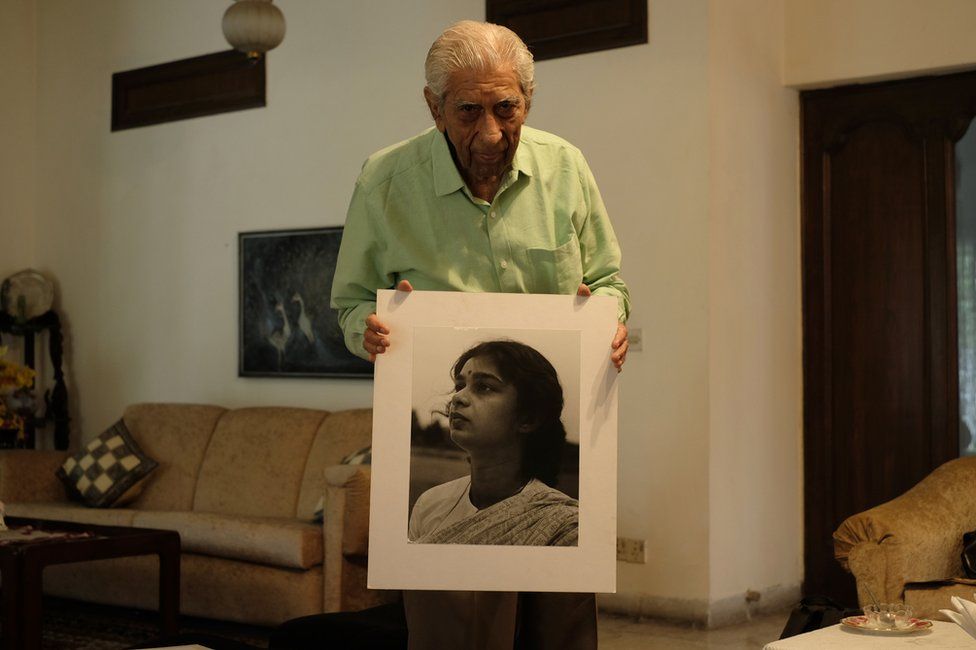
"It was madness, complete madness," Amar Kapur, now 94, told me recently.

He kept a diary after migrating to Delhi following the blood-drenched summer of 1947 via the border city of Amritsar, where the family spent three months on the veranda of a house. In Delhi, the Kapurs then lived without electricity for three years in three rooms in a disputed house.
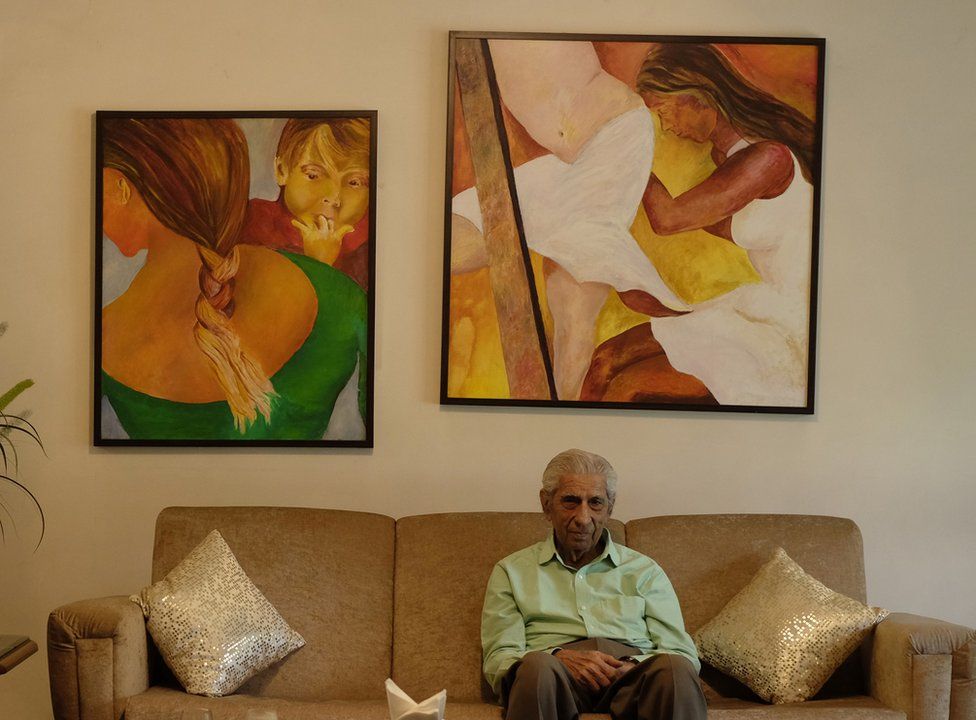
Amar KapurImage copyrightMANSI THAPLIYAL
Image captionAmar Kapur left his Lahore home and came to Delhi a month after partition


"On 3 June 1947 it was decided that India would be partitioned and Pakistan would come into being. On that day was India doomed," Amar wrote in his diary. He wrote that violence hadn't stopped since the announcement.

"Religion, which should be a strictly private affair and the concern of the individual, was being used to cover up beastly acts of murder and other inhuman acts," he wrote.

Asaf, in Lahore, believed none of this would affect their friendship. "We have common memories and common experiences that bind us so closely together that no adventitious circumstances can wrench us apart," he wrote in one of his letters.

But separated by distance, experience and time, the four friends did get separated. For three decades, they completely lost touch. Keeping friendships alive in rival, hostile nations was difficult, not least because it was hard to get visas to visit each other's countries. They also lost each other's addresses.

A simple twist of fate brought the four together again, however.

In the summer of 1980, an uncle of Agha Raza visited Delhi to attend a conference. Before he left, Agha had asked him to try trace Amar and his whereabouts. He told him that his family owned a printing press business in Delhi which bore the Kapur family name.

Agha had been the maverick of the quartet. He had worked for an oil company, joined the Pakistani navy as an officer and then worked for the labour department. In his thirties, he retired to the countryside to look after his family farm, some 120km (74 miles) from Lahore. His friends called him the agriculturist.

Now, he was on the hunt for his long-lost friend.

In Delhi his uncle, a former diplomat, looked up the telephone directory and began calling all the Amar Kapurs. He got lucky with the fourth call, and returned to Pakistan with Amar's address and phone number. Soon the friends reconnected, speaking on the phone and writing to each other.

They shared notes about themselves and their families - all of them were now married with children - and work. There was lot of catching up to do.
PicturesImage copyrightMANSI THAPLIYAL
Image captionAmar Kapur has many memories of his old friends
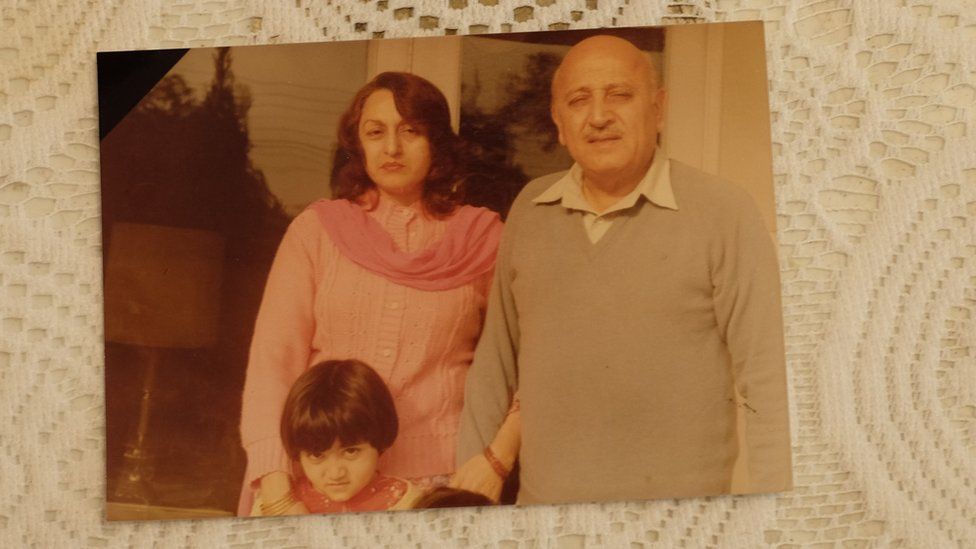
Agha Raza and his wifeImage copyrightMANSI THAPLIYAL
Image captionAgha Raza and his wife visited Amar Kapur in Delhi after partition
LettersImage copyrightMANSI THAPLIYAL
Image caption...and wrote frequently to Amar Kapur


Rishad Haider had become one of Pakistan's most successful banking professionals. Agha was looking after his farm. Asaf continued to work with the Pakistan Times, and chaired Pakistan's National Press Trust until he quit after a run-in with military leader Gen Zia ul-Haq.

Amar was ensconced in the family's thriving new printing business in Delhi and Agra.

They spoke of their joys and sorrows: the marriages of their children, the death of relatives. When Amar lost his family home in a posh Delhi neighbourhood due to a dispute with his brother, Agha wrote to him:

"I was shocked and greatly distressed to hear about the sale of your house. I felt as if my own house had been sold. How very unfortunate that it had to come to this. But who knows. It might turn out to be good for you and the rest of the family."

In January 1982, Amar returned to Pakistan to attend the wedding of Agha's son, Qasim. Since getting a visa required submitting the wedding card well in advance as proof, Agha got a special card made months in advance and sent it to his friend in Delhi.

Since Amar only had a visa to visit Lahore, the others came to visit him from Karachi and Islamabad, where they were working. Over the next decade the Kapurs visited Pakistan three times, once availing of an easier visa given out to Indians to watch a rare cricket Test against their arch rivals.

In Lahore, family members remember night-long conversations and days-long marathon contract bridge games when Amar came visiting.

"They were like blood brothers, like a family. I found it interesting that all the four men were dynamic, successful individuals. But when they met they kind of merged into each other and became completely childlike. The intensity of friendship was something," Cyma Haider, daughter of Rishad Haider, told me.

Amar would often pick up the phone and invite Agha to visit him in Delhi. One day, he wrote to him, saying he hoped to visit him soon.

"Your repeated invitations to visit you all are so full of love and kindness that I feel very guilty in not having been able to make it so far. But sooner or later, Inshallah, we will and I hope in the not too distant future."
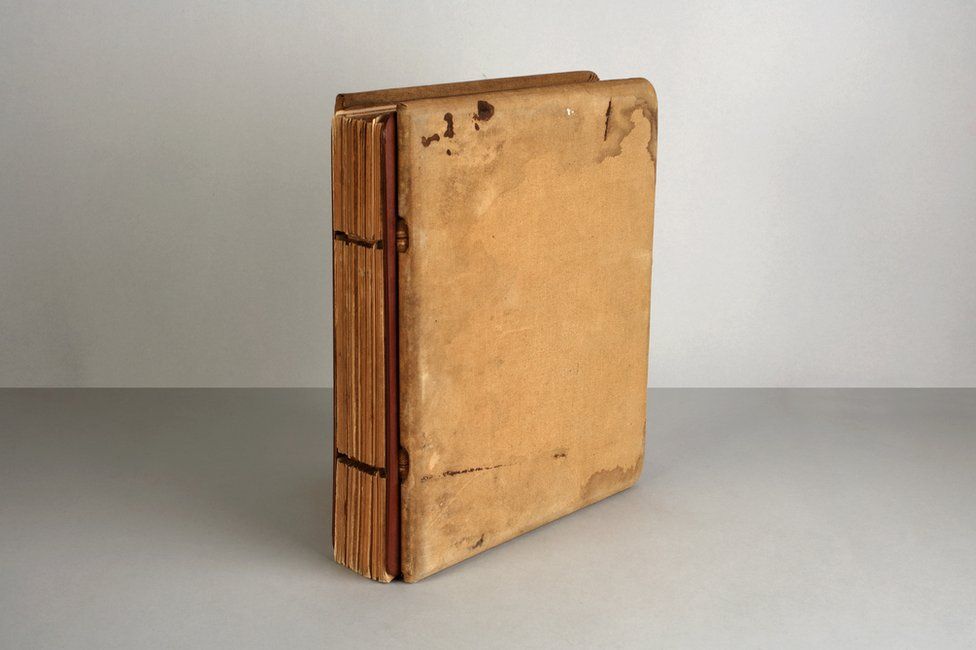
Amar Kapoor's diaryImage copyrightPARTITION MUSEUM
Image captionAmar Kapur maintained a diary in the days after the partition
Amar Kapoor's diaryImage copyrightPARTITION MUSEUM
Image caption...where he wrote that India was "doomed" after the traumatic separation


As winter approached in 1988, Agha promised Amar that he would see him in Delhi in the new year. But in December, he collapsed in his home and died of a heart attack, aged 67.

Rishad was the next to depart, in 1993, also aged 67. Feeling rather unwell, he was admitted to hospital a few days before his death, telling his family, "I think my time has come."

In June 1996, an unusually despondent Asaf wrote to Amar:

"How saddening is to lose lifelong friends. It is as if a part of you dies. Both Agha Ahmed and Rishad have left a void in my life, a void that can never be filled. I have myself been keeping indifferent health for some time now, and it may not be long before I join my departed friends in their eternal abode."

"My only wish is that I should die as they died - suddenly and without lingering pain."

Asaf wrote about "leading a lonely life, with both our children away in the US". He said they did meet on short visits to each other's countries every two to three years, but these "short visits only sharpen the sense of loneliness".

"Sometimes I feel that life has become meaningless."
Amar KapurImage copyrightMANSI THAPLIYAL
Image captionAmar Kapur took this picture of his wife Minna before they got married in 1955


Asaf contemplated a future where their children would continue the friendships forged by their parents.

"If you and I cannot meet, let our children get together if they can and carry on a friendship which their fathers have been able to retain only flimsily due to a tragic quirk of history," Asaf wrote.

A month later, on 29 July, Asaf Khwaja woke up in the morning, showered, had his breakfast and began reading the morning papers when he suffered a heart attack and died. He was 71.

At 94, Amar Kapur is the only survivor of the brotherhood. He sold off his business some 20 years ago and continues to lead a busy life with his wife, Minna, in his two-storey home that he built in 1986 in Faridabad on the outskirts of Delhi.

He is remarkably agile for his age, and lives with his pencil drawings, paintings, photographs and a boxful of memories. He is rather stoic about his past, taking more pride in his wife's work with the Rotary Club, than anything else.

I ask whether he misses his old friends.

"I miss them," he says. "I loved them and I love them even more now."

"They are the only real friends I ever had."

Pictures by Mansi Thapliyal. Archive pictures provided by family members. Interviews conducted in Delhi, and by phone to Karachi, Lahore, Islamabad and California.

Friday, August 22, 2014

Amid Afghanistan's escalating war, a battle to beat polio

Amid Afghanistan's escalating war, a battle to beat polio

File picture shows a boy receiving polio vaccination drops during an anti-polio campaign in Kabul.


KABUL (Reuters) - Tens of thousands of volunteers fanned out across Afghanistan this week, braving deteriorating security and distrusting parents to administer two chilled drops of the oral polio vaccine each to millions of children.
Keeping the highly infectious polio disease in check in any country is a daunting task. But in a nation where Taliban militants are fast gaining ground against government forces, it's also a dangerous one.
Afghanistan is one of only three nations where the polio virus is still endemic, along with Pakistan and Nigeria. For a nation at war, its anti-polio campaign has had remarkable success, bringing the number of cases down from 63 in 1999 to just 14 in 2013. Only eight new cases have been confirmed so far this year, compared to 108 in Pakistan.
But as fighting between Afghan forces and militants intensifies ahead of the withdrawal of most foreign troops this year, health workers risk losing precious access to the places - and children - they need to keep tabs on.
This week, in some restive areas of the east and southeast, health workers had yet to go door to door to deliver the vaccine, said Dr. Mohammad Wasim Sajad, a training officer in the Ministry of Public Health in Kabul.
"People are not willing to go out," he said, adding that negotiations with local groups to allow vaccinators to do their work safely were under way.
Vaccination is the only known way to prevent polio, an infectious disease that attacks the nervous system mainly in children under five and can lead to permanent paralysis and death. It has no cure.
"We don't see a big problem now, but if (major) fighting continues long term, then access will be difficult," said Abdul Majeed Siddiqi, the head of mission in Afghanistan for HealthNet TPO, an NGO that advises the Afghan government on polio.
People's attitudes toward the vaccine are another challenge.
In a dusty hillside neighborhood of Bagh Qazi, Freshta Faizi, a volunteer, trudged from house to house on Monday, asking residents if their children had been given their drops.
"Sometimes they just say no and shut the door," said Faizi. "They say it won't make any difference. I've had people tell me the vaccine is just American urine."  (hilarious and incredibly sad/ignorant at the same time -ruthriv)
In August, Human Rights Watch reported that in parts of the southern province of Helmand, the Taliban had stopped health officials from sending out mobile vaccination teams.
That was an alarming development, because - unlike some militant factions in Pakistan, which have targeted and killed anti-polio campaigners - the Afghan Taliban have pledged support for vaccination.
A Taliban spokesman said the group had concerns that some polio vaccinators in Helmand were promoting government policy, not health. However, he told Reuters by phone that after the health ministry had organized talks on the issue, the group was satisfied. "There are no more problems," he said.
Though a win for the campaign, the scare underscores the fragility of Afghanistan's gains. Negotiations on allowing vaccinators to move freely throughout the country were conducted locally and on a "case-by-case" basis, said Sajad.
Ten years ago, Afghanistan was tantalizingly close to halting the circulation of the virus within its borders: only four cases were confirmed in 2004, according to the government.
But as security deteriorated, health workers couldn't travel to dangerous areas and were unable to make sure children were getting the vaccine. By 2012, the number of polio cases in Afghanistan rose to 37.

AN UNEXPECTED OPPORTUNITY
Complicating matters, this summer over 150,000 refugees from North Waziristan, a tribal region of Pakistan where leaders banned the polio vaccine in 2012, poured over the border into Afghanistan, seeking refuge from a military offensive against insurgents.
The influx from an area that has generated most of Pakistan's polio cases this year immediately raised alarm.
Most of Afghanistan's new cases of polio this year are genetically linked to Pakistan, according to HealthNet TPO. But the government says that, so far, only one case has been identified as having coming from a North Waziristan refugee.
The flood of refugees yielded an unexpected opportunity, however: over 400,000 vaccine doses were given out in Pakistan along the routes residents used to flee their homes, according to the Global Polio Eradication Initiative.
That's good news for the global fight to exterminate polio and particularly for Afghanistan, where thousands of residents move across the Pakistan border every day.
"If there is control in Pakistan, there will be control in Afghanistan," said Siddiqi. "If there is no control in Pakistan, the problems in Afghanistan will continue."
(Additional reporting by Hamid Shalizi in Kabul; Writing by Krista Mahr; Editing by John Chalmers and Nick Macfie)

Thursday, December 26, 2013

Pakistan pilot's sandwich demand delays flight by over 2 hours (...is this real?)

Pakistan pilot's sandwich demand delays flight by over 2 hours
PTI | Dec 16, 2013, 05.14 AM IST

LAHORE: A foodie pilot delayed a New York-bound Pakistan International Airlines' flight by two and a half hours because he wanted to take sandwiches, which weren't in approved menu, aboard the plane.

PIA flight Pk-711, scheduled for New York via Manchester, was ready for departure on Saturday from Allama Iqbal International Airport in Lahore at 6.45am (local time). The catering department served the approved menu, including lunch, peanuts, chips and biscuits but flight captain Noushad asked them to serve him sandwiches, The Nation daily reported.

The catering staff expressed their inability to serve anything beyond the approved menu and also informed him of the sensitivity of the flight's departure time. The staff told him that sandwiches could only be arranged by placing an order to a five-star hotel in the city, which would take more than two hours.

The captain remained adamant and said no matter what he needed his sandwiches , it said.
The catering department then contacted the PIA head office in Karachi and brought the matter to their notice. Surprisingly, the management then directed the catering department to meet the pilot's demand.

Finally, the sandwiches were arranged from the five-star hotel concerned and the flight could depart to its destination at 9.15 am (local time) after a delay of two and a half hours, the report added.

Tuesday, October 29, 2013

Pakistani doctors angered by failure to halt abductions

Pakistani doctors angered by failure to halt abductions


Medical staff held protests, demand government to do more to tackle kidnappings Medical personnel in Quetta want the government to tackle the wave of kidnappings


On the evening of 17 September Dr Abdul Manaf Tareen, a renowned heart specialist in Pakistan, was about to go home when a group of armed men appeared at his hospital.

When the doctor resisted their demand that he leave with them, he was hit on the chest with the butt of a rifle and dragged away. He was then shoved into a vehicle waiting outside and driven away.

The kidnapping took place at a short distance from the well-guarded headquarters of the main security force in Balochistan province, the Frontier Corps.

Free Dr. Abdul Manaf Tareen's photos on Facebook Dr Tareen is the latest victim of rampant kidnappings in Balochistan

Access to the area is also protected by numerous police and army checkpoints, while entry and exit points into Quetta are guarded by Pakistani troops and security service personnel.

Yet, as it turned out, none of them could prevent the abductors spiriting away their latest victim.
Growing lawlessness
Dr Tareen is a well-respected cardiologist. Colleagues describe him as a self-made man, who despite his humble origins, worked hard to become one of the best doctors in his field.

Patients come to him from all over Pakistan, and even Iran and Afghanistan. In Balochistan, he is seen as an inspiring figure who has touched many lives.

His abduction has outraged the medical community, already reeling from growing lawlessness in the province.

Doctors angry at the alleged apathy of the authorities have organised almost daily protest rallies, gone on hunger strike and partially boycotted government-run hospitals.

Dr Naqeeb Ullah Achakzai speaking at the protest rally Naqeeb Ullah Achakzai says the government needs to provide adequate security

Their actions do not seem to have had much of an impact on the authorities, but have added to the misery of patients from remote and impoverished areas waiting at clinics without doctors.

"How can we serve people and practice our profession in this lawlessness?" asks Dr Naqeeb Ullah Achakzai. "We are not safe. We want security from the government."
'Everyone looked on'
Dr Tareen's case is only the latest medical practitioner to be kidnapped.

"During the last five years, 26 of our highly qualified doctors and professors have been kidnapped," says Dr Aftab Kakar, a spokesperson for the Balochistan branch of the Pakistan Medical Association. "A majority of them returned after paying huge amounts in ransom money."

Among them was Dr Ghulam Rasool, head of psychiatry at Bolan Medical College in Quetta. He was abducted from a crowded street in the city centre by six armed men.

"Everyone looked on, but no-one dared do anything," he recalls. Soon after, he was blindfolded and driven for about five or six hours to an unknown location.

He does not like to talk about what happened next, only that he was freed after 17 days in captivity.

"The ransom money my family had to arrange was big enough that nine months later, we are still paying for it," says Dr Rasool.

He adds that it was a painful experience and one that shook him and his family psychologically and emotionally.
Private guards
"Because we are educated but weak members of this tribal society, we are seen as wealthy professionals and therefore have become a soft target for easy money," explains Dr Rasool.

But it has not stopped him from going about his business.

"I am a consultant psychiatrist, a professor, a trainer and an examiner. I am still trying to get on with life," he says. "The only difference is I now have to carry private armed guards for my protection."

Residents, rescue workers and security officials gather at the site of a bomb blast in Quetta October 10, 2013 A bomb attack in Quetta last month killed six, amid growing violence in the region

Balochistan has a seen growing violence in recent years.

An extremist Sunni militant group has launched large-scale attacks against members of the Shia Hazara minority community. Criminal and militant groups allied to the Taliban and al-Qaeda have kidnapped and killed scores of people.

These groups have seemingly operated with impunity while thousands of Pakistani troops have been busy fighting a long running separatist Baloch insurgency.

The Frontier Corps stands accused of enforced disappearances, torture and killings of suspected Baloch separatists. It is widely despised as an oppressive arm of the Pakistani state.

And in Quetta, increasingly, the force is also accused of not just tolerating, but protecting criminal gangs.

Maj Gen Ejaz Shahid, the inspector general of the Frontier Corps Balochistan, dismisses such allegations.

He blames "terrorist and "sub-nationalist" groups" for the rise in kidnappings. But he insists that his force is taking new measures to tighten security and ensure better coordination with police and other security agencies to bust criminal gangs.

"I can assure you we are part of the solution, not part of the problem," Gen Shahid adds.

Dr Ghulam Rasool interviewed at the rally Dr Ghulam Rasool says medics are an easy target
'Turning a blind eye'
But for doctors protesting on the streets of Quetta, these are assurances they have heard before.

"Officially, they tell us they are trying their best [to recover kidnap victims]," says a physician leading the doctor's rallies in Quetta. "Privately, they encourage the families to cut a deal with the abductors."

He says there is growing evidence that security forces often turn a blind eye to kidnappings allegedly because they get paid off by the abductors.

The Pakistan Medical Association estimates that during the last five years, about 82 of Balochistan's best doctors and professors have left the province. Many of them are said to have moved to Europe and the Middle East.

Some of them were friends and colleagues of Dr Rasool.

I ask him if he has considered leaving.

"Yes," he says. "But then I ask myself if all of us leave, who'll be left here to help the people of this province."

For now, Dr Rasool is busy supporting colleagues as they plan their next protest to press the authorities to ensure the safe return of Dr Tareen.